Choosing a commercial floor in Florida is not the same as choosing one anywhere else. The combination of year-round humidity, intense UV exposure, hurricane-season flooding, and coastal salt air creates conditions that destroy the wrong flooring system within a few years. This guide breaks down every option available to Florida business owners, with honest comparisons, real cost data, and industry-specific recommendations.
Whether you are building a new facility, renovating an existing space, or recovering from storm damage, this resource will help you make a confident, informed decision about your commercial flooring investment.
Why Your Commercial Floor Matters More Than You Think
Your floor is the largest visible surface in any commercial space. Customers form first impressions within seconds of walking through the door, and a cracked, stained, or worn floor signals neglect regardless of how well you run your business. A clean, professional floor communicates competence and attention to detail before a single word is spoken.
Beyond aesthetics, flooring directly impacts your bottom line in ways most business owners underestimate. Slip-and-fall accidents are the leading cause of premises liability claims in Florida, and the condition of your floor is the first thing an insurance adjuster examines after an incident. A well-maintained, slip-resistant floor system can reduce your exposure significantly.
Maintenance costs compound over time. A flooring system that requires weekly waxing, quarterly stripping, or annual patching will cost far more over a decade than one with higher upfront costs but minimal ongoing maintenance. When you factor in employee productivity lost during maintenance closures, the gap widens even further.
Employee satisfaction is another overlooked factor. Workers who stand on concrete all day experience fatigue, joint pain, and higher absenteeism. The right flooring system can incorporate anti-fatigue properties, thermal comfort, and noise reduction that directly affect worker retention and productivity. If your business depends on commercial floor performance, the investment in quality flooring pays dividends across every area of operations.
Commercial Flooring Options Compared
Florida business owners have six primary commercial flooring options. Each has distinct advantages and limitations depending on your industry, traffic patterns, and budget. Here is an honest breakdown of each.
Epoxy Flooring
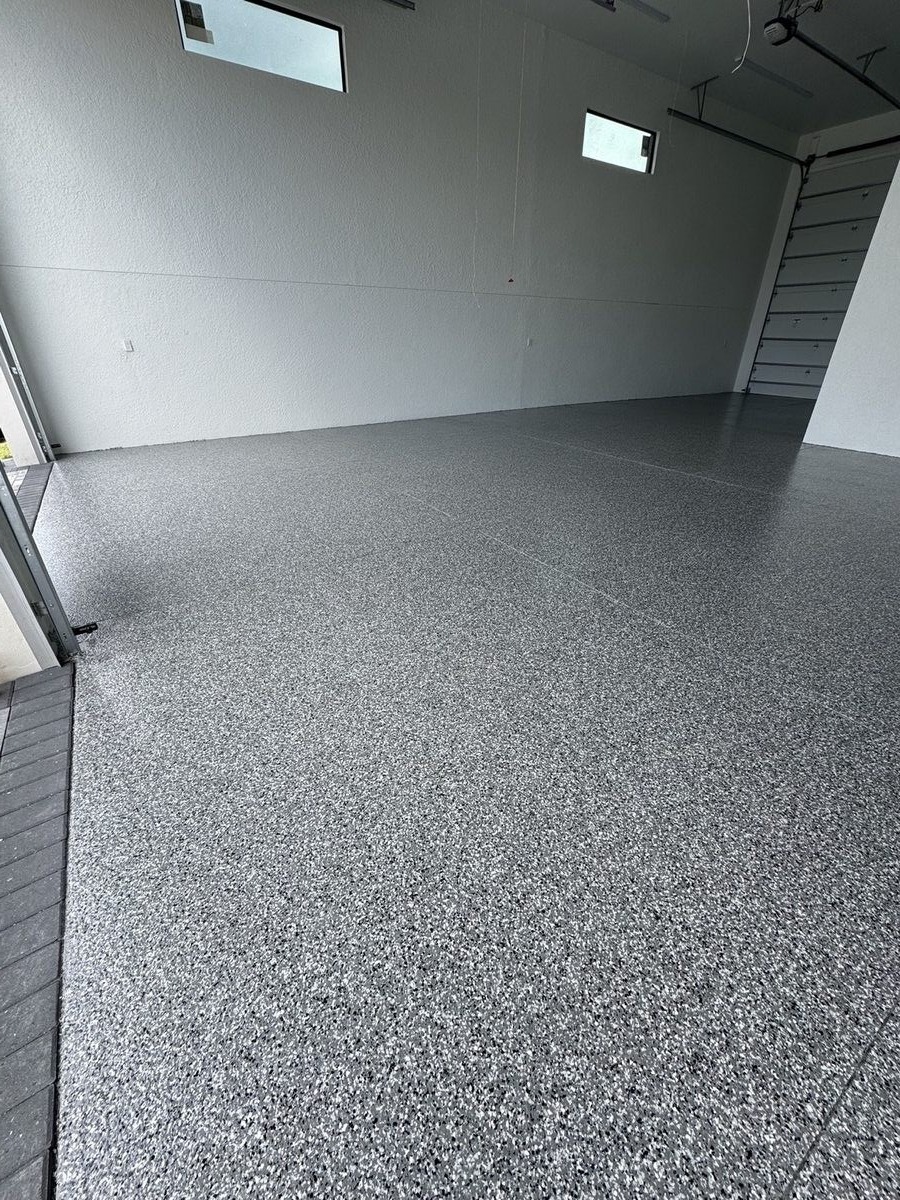
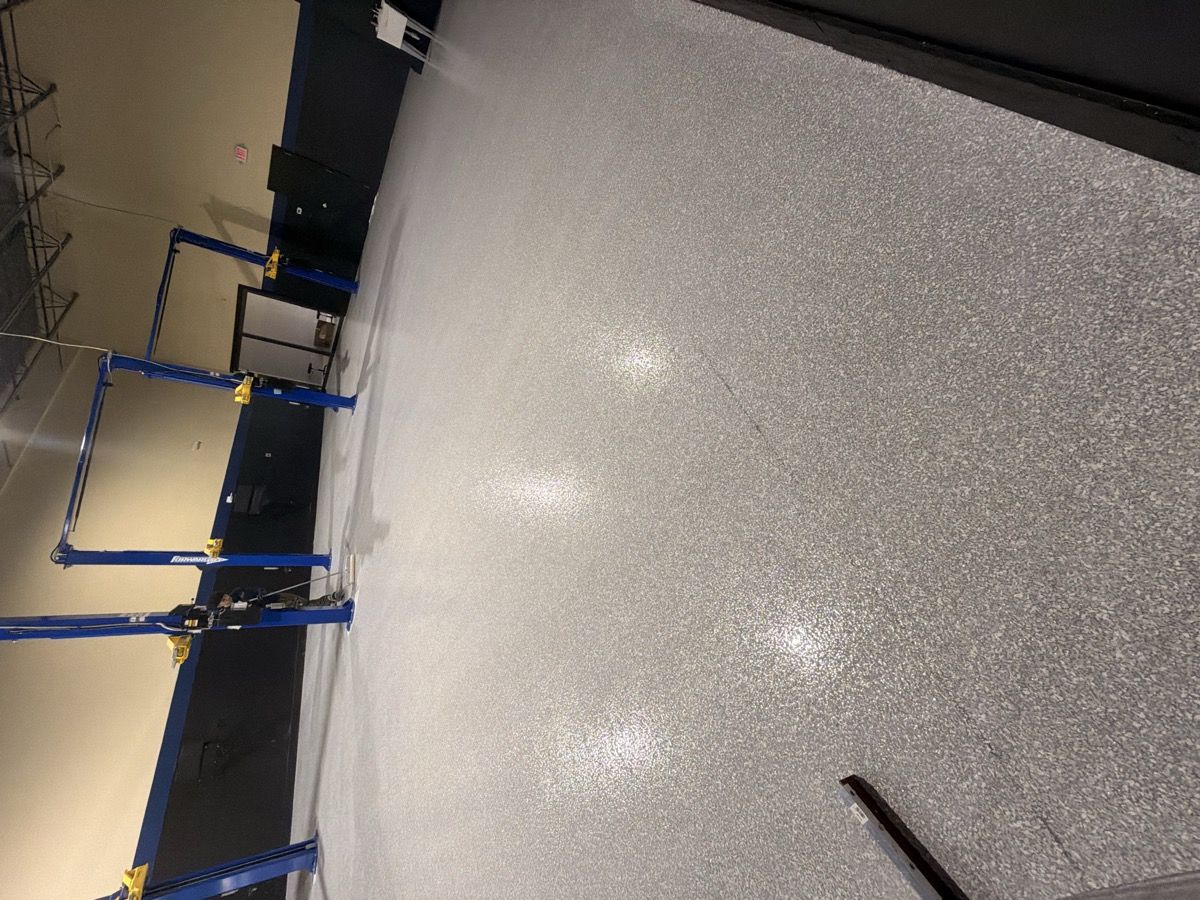
Epoxy floor coatings create a seamless, high-performance surface by chemically bonding to your existing concrete slab. The result is a monolithic floor with no seams, joints, or grout lines where moisture, bacteria, or debris can accumulate. Modern commercial epoxy systems offer exceptional chemical resistance, impact tolerance, and customizable aesthetics including solid colors, decorative flake broadcasts, metallic effects, and custom logo embedding.
Epoxy is particularly well-suited to Florida because the seamless surface eliminates moisture penetration points. When properly installed with a vapor barrier primer, it handles the state's high humidity and concrete moisture vapor without delamination. Cure times are affected by temperature and humidity, so professional installation by a team experienced in Florida conditions is essential.
Polished Concrete
Polished concrete uses a multi-step mechanical grinding and densifying process to transform your existing slab into a smooth, reflective surface. It is one of the lowest-maintenance flooring options available and delivers a modern, industrial aesthetic that works well in retail, office, and showroom environments. Our polished concrete services produce floors that resist staining and require only dust mopping and occasional damp mopping to maintain their appearance.
The limitation of polished concrete is that it does not provide the chemical resistance or impact protection of an epoxy or urethane system. It is best suited to environments with moderate traffic and minimal chemical exposure.
Urethane Cement
Urethane cement flooring is the gold standard for environments that experience thermal shock, such as commercial kitchens, food processing facilities, and cold storage areas. These systems can withstand temperature swings from sub-zero to steam cleaning without cracking or delaminating. They are also USDA-approved for direct food contact areas. Our urethane cement installations provide a seamless, non-porous surface that meets the strictest food safety and sanitation requirements.
Urethane cement carries a higher price point than standard epoxy, but for food service and pharmaceutical applications, the thermal shock resistance and regulatory compliance make it the only appropriate choice.
VCT (Vinyl Composition Tile)
VCT has been a default choice in commercial spaces for decades, primarily because of its low initial cost. However, the ongoing maintenance burden is substantial. VCT requires regular stripping, waxing, and buffing to maintain its appearance, and the seams between tiles are vulnerable to moisture penetration. In Florida's high-humidity environment, moisture can migrate beneath VCT tiles and cause adhesive failure, curling, and mold growth.
For businesses operating on tight budgets with low traffic, VCT can be a functional short-term solution. But the total cost of ownership over ten years typically exceeds that of epoxy or polished concrete when you account for maintenance labor and materials.
Ceramic and Porcelain Tile
Tile delivers strong visual appeal and works well in lobbies, restrooms, and showroom areas where aesthetics are the priority. Porcelain tile in particular offers good moisture resistance and a wide range of design options. However, tile is vulnerable to cracking under heavy loads, point impacts, and forklift traffic. Grout lines require regular sealing and are prone to staining and bacterial growth, adding maintenance complexity.
In Florida, the thermal expansion and contraction cycles from air conditioning versus outdoor heat can stress grout joints and lead to cracking over time. Tile is best reserved for light-traffic commercial areas where appearance matters most.
Stained Concrete
Acid-stained or dye-stained concrete offers a decorative finish at a moderate price point. The results can be visually striking, with organic color variations that mimic natural stone. However, stained concrete provides minimal surface protection. It does not resist chemicals, abrasion, or impact the way epoxy or urethane systems do. In high-traffic commercial environments, stained concrete will show wear patterns within a few years without a protective topcoat.
Staining works best as a decorative treatment in low-traffic areas or as a base layer beneath a clear epoxy or polyurethane topcoat that provides the necessary protection.
Comparison Table
| Type | Durability | Maintenance | Cost/sqft | Best For |
|---|---|---|---|---|
| Epoxy | Excellent (10-20 yrs) | Very Low | $3 - $7 | Warehouses, retail, healthcare, auto shops |
| Polished Concrete | Good (15-25 yrs) | Very Low | $3 - $8 | Offices, retail, showrooms |
| Urethane Cement | Excellent (15-20 yrs) | Low | $7 - $12 | Kitchens, food processing, breweries |
| VCT | Fair (5-10 yrs) | High | $2 - $5 | Budget-conscious, light traffic |
| Ceramic/Porcelain Tile | Good (10-20 yrs) | Moderate | $5 - $15 | Lobbies, restrooms, showrooms |
| Stained Concrete | Fair (3-7 yrs) | Moderate | $2 - $4 | Low-traffic decorative areas |
Florida-Specific Considerations
Every commercial flooring decision in Florida must account for environmental factors that simply do not exist in most other states. Ignoring these factors is the most common reason commercial floors fail prematurely in the Sunshine State.
Humidity and Moisture Vapor Transmission
Florida's relative humidity regularly exceeds 80%, and concrete slabs in the state are notorious for moisture vapor transmission. When warm, humid air meets a cooler slab, condensation forms beneath coatings and adhesives. This moisture vapor drives delamination in epoxy, curling in VCT, and mold growth beneath nearly every flooring type. Any credible commercial flooring installer in Florida should perform a calcium chloride or relative humidity test before recommending a system.
The solution is proper moisture mitigation. Vapor barrier primers, moisture-tolerant epoxy formulations, and breathable polished concrete systems are all designed to handle Florida's unique moisture conditions. Skipping this step is the single most common cause of commercial floor failure in the state.
Hurricane Season Preparedness
When a Category 3 hurricane pushes storm surge through your building, your floor needs to survive the water and be serviceable again quickly. Seamless systems like epoxy and polished concrete can be cleaned, dried, and returned to operation within days of a flood event. VCT, carpet, and wood flooring typically require complete tear-out and replacement after significant water intrusion. For businesses in flood-prone areas of Southwest Florida or along the coast, storm resilience is not optional.
UV Exposure and Yellowing
Florida receives more UV radiation than nearly any other state, and south-facing storefronts and spaces with large windows are particularly vulnerable. Standard amine-cured epoxies will yellow and chalk when exposed to direct sunlight. If your space has significant sun exposure, you need a UV-stable polyurethane or polyaspartic topcoat to maintain color stability and gloss retention over time.
Sand, Salt, and Coastal Abrasion
Businesses within a few miles of the coast deal with a constant influx of sand and salt tracked in by foot traffic. Sand is highly abrasive and will wear through thin coatings and wax finishes quickly. Salt accelerates corrosion of concrete and metal fixtures. A commercial flooring system near the coast needs sufficient film thickness and abrasion resistance to withstand this daily assault. Epoxy systems with quartz or flake broadcasts add texture and thickness that extend service life in coastal environments.
Hot Tire Pickup in Garages
Florida heat makes hot tire pickup a serious concern for any commercial space with vehicle traffic. When tires heat up on sun-baked asphalt and then park on a coated floor, the heat can soften certain coatings and cause the tire to bond to the surface. When the vehicle moves, it peels the coating with it. High-quality commercial epoxy and polyaspartic systems are formulated to resist hot tire pickup, but cheaper DIY or retail-grade coatings will fail under these conditions.
Thermal Cycling
The temperature differential between Florida's 95-degree exterior and a 72-degree air-conditioned interior creates thermal cycling stress on concrete slabs and floor coatings. This constant expansion and contraction can cause rigid systems to crack and delaminate at control joints. Flexible coating systems and proper joint treatment during installation are essential to long-term performance in Florida's climate.
Best Flooring by Industry
Different industries place different demands on their floors. Here is what we recommend based on hundreds of commercial installations across Florida.
Warehouses and Distribution Centers
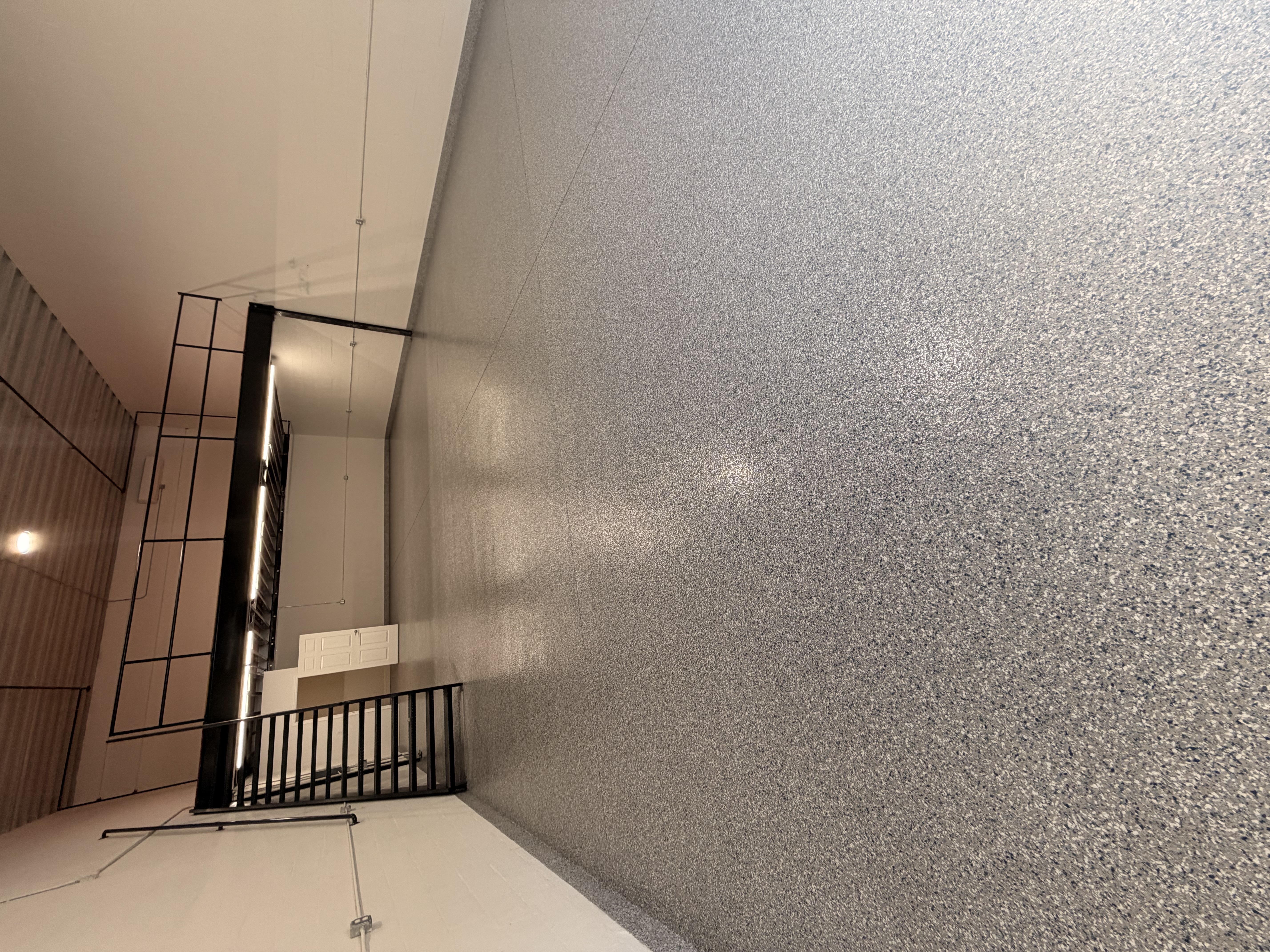
Warehouse floors endure forklift traffic, pallet jack loads, dropped inventory, and constant abrasion. The ideal system is a high-build epoxy with a polyurethane topcoat that provides impact resistance, chemical protection, and easy cleaning. Line striping for traffic lanes, loading zones, and safety areas can be incorporated during installation. Our warehouse flooring solutions are designed specifically for these heavy-duty demands.
Restaurants and Food Service
Commercial kitchens and dining areas require flooring that meets health department standards while surviving grease, water, thermal shock from hot equipment, and constant foot traffic. Urethane cement is the top choice for kitchen areas due to its thermal shock resistance and USDA compliance. Dining rooms benefit from decorative epoxy or polished concrete that creates an inviting atmosphere while remaining easy to clean. Learn more about our restaurant flooring systems.
Healthcare Facilities
Medical offices, clinics, and surgical centers need seamless, non-porous flooring that meets strict sanitation standards. The absence of grout lines and seams is critical for infection control. Epoxy flooring with antimicrobial additives provides a surface that can be disinfected thoroughly without harboring bacteria in crevices. Chemical resistance to cleaning agents and disinfectants is equally important. Explore our healthcare flooring options.
Retail and Showrooms
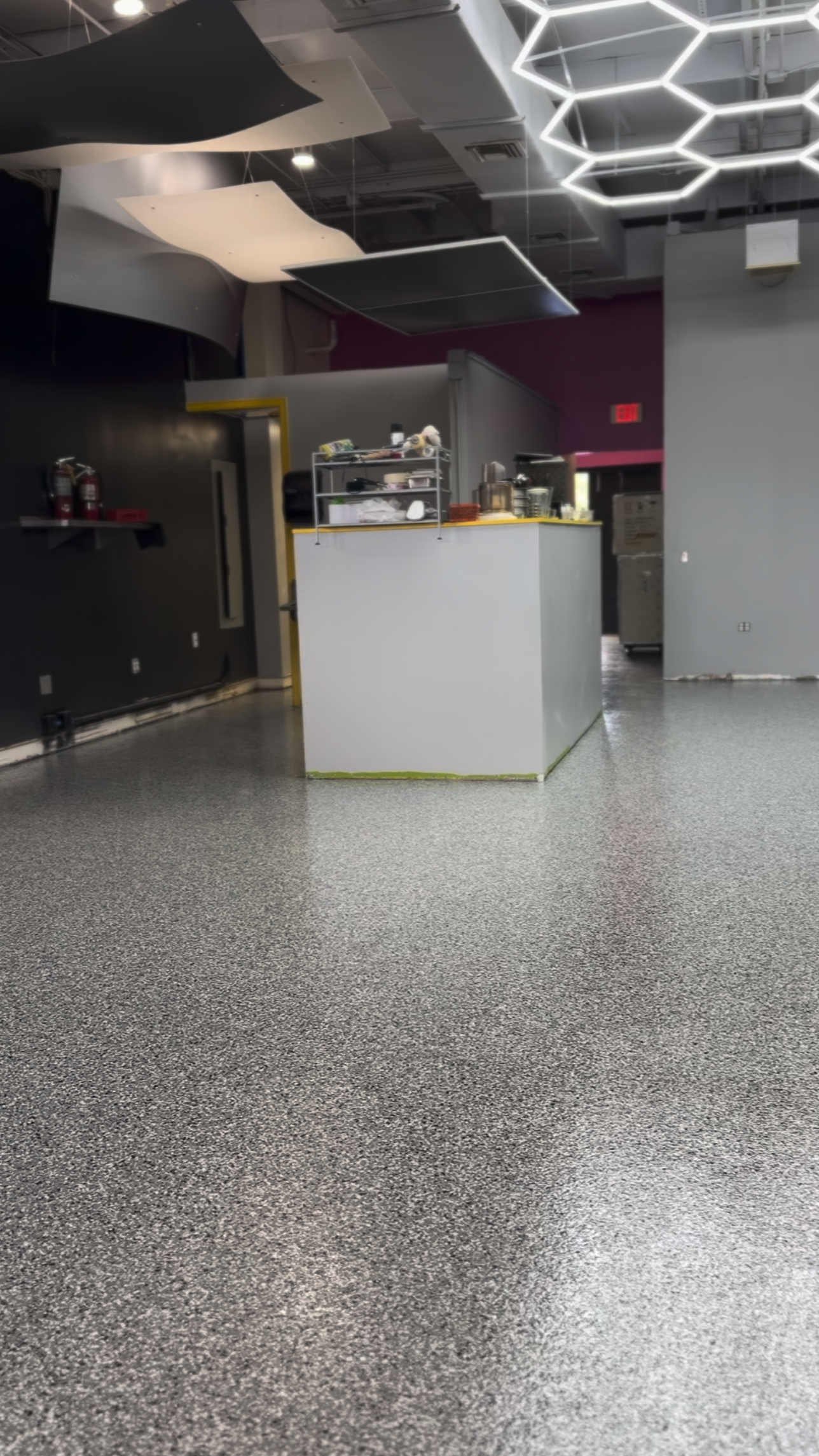
Retail environments balance aesthetics with durability. Your floor needs to look polished and professional while handling shopping cart traffic, point loads from display fixtures, and high foot traffic during peak hours. Metallic epoxy, decorative flake systems, and polished concrete all deliver showroom-quality appearance with commercial-grade performance. See our retail flooring portfolio for examples.
Auto Shops and Service Centers
Automotive facilities deal with oil, transmission fluid, brake cleaner, and other aggressive chemicals daily. Hot tire pickup from vehicles driven in from Florida's sun-baked roads is a constant threat. A high-performance epoxy system with chemical-resistant topcoat and hot-tire-resistant formulation is essential. Our auto shop flooring installations are engineered for these exact conditions.
Manufacturing Facilities
Manufacturing floors must withstand heavy machinery, chemical spills, forklift traffic, and continuous operation. Depending on the specific manufacturing process, you may need chemical resistance to specific solvents, electrostatic dissipation for electronics manufacturing, or USDA compliance for food production. Our manufacturing flooring systems are tailored to each facility's unique requirements.
Office Buildings
Modern office spaces are moving away from carpet toward polished concrete and decorative epoxy for a cleaner, more contemporary look. These systems eliminate the allergen concerns associated with carpet, reduce maintenance costs, and create a bright, professional environment. Noise reduction can be addressed through area rugs and acoustic ceiling treatments rather than relying on carpet as a sound absorber. See our office flooring options.
Cost Guide: What to Budget
Commercial flooring costs in Florida vary based on the system you choose, the condition of your existing slab, and the size of your project. Here are realistic budget ranges based on current market pricing.
- Basic epoxy coating (solid color): $3 - $5 per sqft
- Decorative flake epoxy: $4 - $6 per sqft
- Metallic epoxy: $6 - $10 per sqft
- Polished concrete: $3 - $8 per sqft
- Urethane cement: $7 - $12 per sqft
- VCT (installed with initial wax): $2 - $5 per sqft
- Ceramic/Porcelain tile (installed): $5 - $15 per sqft
Factors That Affect Your Final Cost
Square footage is the biggest driver, but several other factors affect pricing significantly:
- Slab condition: Cracks, spalling, moisture issues, and old coatings that need removal add to surface preparation costs
- System complexity: Multi-coat systems with decorative elements cost more than single-coat applications
- Moisture mitigation: If your slab requires a vapor barrier primer, expect to add $1 - $2 per sqft
- Access and scheduling: Phased installations that work around your operations may take longer and cost slightly more
- Project size: Larger projects typically have lower per-sqft costs due to economies of scale
Return on Investment
The true cost comparison happens when you look at total cost of ownership over ten to fifteen years. A 5,000-sqft commercial space with VCT at $3/sqft installed ($15,000) will spend an additional $5,000 - $7,500 annually on stripping, waxing, and patching. After ten years, that is $65,000 - $90,000 in total floor costs. The same space with epoxy at $5/sqft ($25,000) will spend under $1,000 per year on maintenance, totaling approximately $35,000 over the same period. The epoxy option saves $30,000 - $55,000 over the decade while providing a superior surface throughout.
Use our cost calculator to estimate your specific project based on square footage, system type, and current slab condition.
Maintenance Requirements by Flooring Type
Understanding maintenance obligations before you choose a flooring system will prevent budget surprises down the road. Here is what each system requires to stay in top condition.
- Epoxy: Daily dust mopping, weekly damp mopping with neutral pH cleaner, annual inspection of high-traffic areas. No waxing, stripping, or buffing required.
- Polished Concrete: Daily dust mopping, periodic damp mopping, re-densification every few years in high-traffic areas. No coatings to reapply.
- Urethane Cement: Daily cleaning with approved sanitizers, periodic deep cleaning. Designed for aggressive wash-down environments.
- VCT: Daily sweeping and mopping, monthly buffing, quarterly stripping and re-waxing. The most labor-intensive option by far.
- Ceramic Tile: Daily sweeping and mopping, quarterly grout sealing, periodic grout repair and re-grouting in high-traffic areas.
- Stained Concrete: Daily sweeping, weekly mopping, periodic re-sealing every one to three years depending on traffic.
For detailed maintenance procedures specific to epoxy floors, read our complete guide on how to maintain epoxy floors for maximum lifespan.
How to Choose: A Decision Framework
With so many options available, the decision can feel overwhelming. Use this five-step framework to narrow your choices systematically.
Step 1: Assess Your Traffic Patterns
Map out exactly how your floor is used. Where do forklifts drive? Where do customers walk? Where do spills happen most frequently? The answers will determine the minimum performance requirements your floor must meet. Heavy equipment traffic demands high-build epoxy or urethane cement. Foot-traffic-only areas can consider polished concrete or decorative options.
Step 2: Identify Environmental Hazards
List every chemical, liquid, and substance that regularly contacts your floor. Automotive fluids, kitchen grease, medical disinfectants, and industrial solvents each require specific chemical resistance. Match your flooring system to the specific chemicals present in your environment rather than relying on generic claims.
Step 3: Set Your Budget (Including Maintenance)
Calculate total cost of ownership over ten years, not just installation cost. A system that costs $2 more per sqft upfront but saves $5,000 per year in maintenance pays for itself within the first year. Include maintenance labor, materials, downtime during maintenance, and anticipated replacement or recoating costs in your comparison.
Step 4: Consider Aesthetics and Branding
Your floor is a branding opportunity. Custom colors, logo embedding, metallic effects, and decorative flake patterns can reinforce your brand identity and create a memorable customer experience. Determine how important aesthetics are relative to pure performance, and choose a system that delivers both where possible.
Step 5: Plan for the Future
Will your business expand? Will your operations change? Choose a flooring system that can be recoated, repaired, or extended as your needs evolve. Seamless systems like epoxy and polished concrete are easier to modify and extend than tile or VCT, which require exact material matching that may not be available years later.
Still not sure which direction to go? Contact us for a free consultation. We will assess your space, discuss your specific needs, and recommend the best system for your situation with no obligation.
Frequently Asked Questions
How long does commercial epoxy flooring last in Florida?
A professionally installed commercial epoxy system typically lasts 10 to 20 years in Florida, depending on traffic volume, chemical exposure, and maintenance. High-traffic warehouses and auto shops may need a topcoat refresh at the 8 to 10 year mark, while office and retail environments often exceed 15 years before any work is needed. The key is proper surface preparation and moisture mitigation during installation.
Can epoxy flooring be installed over existing tile or VCT?
In most cases, the existing flooring must be removed before epoxy installation. Epoxy bonds to concrete through a chemical and mechanical connection that requires direct contact with a properly prepared slab. Installing over tile, VCT, or other coatings creates an intermediate layer that can fail, taking the new epoxy with it. Removal and surface preparation add to the project cost but are essential for long-term performance.
How long does a commercial installation take?
Most commercial epoxy installations are completed in 3 to 5 days, including surface preparation, coating application, and initial cure time. Spaces under 5,000 sqft can often be completed over a weekend. Larger projects or phased installations may take longer. Light foot traffic is typically possible within 24 hours of the final coat, with full operation resuming at 48 to 72 hours.
Is epoxy flooring slippery when wet?
Standard high-gloss epoxy can be slippery when wet, but this is easily addressed during installation. Anti-slip additives such as aluminum oxide, silica, or polymer grit can be broadcast into the topcoat to create a textured, slip-resistant surface. Decorative flake systems also provide natural texture that improves traction. We recommend slip-resistant finishes for any commercial environment where water, grease, or other liquids may be present on the floor.
What happens if my epoxy floor gets damaged?
One of the advantages of epoxy flooring is that localized damage can be repaired without replacing the entire floor. Chips, gouges, and worn areas can be ground down and recoated to match the surrounding surface. For larger areas of wear, a full topcoat reapplication restores the floor to like-new condition at a fraction of the original installation cost.
Do I need to close my business during installation?
Not necessarily. Many commercial installations can be phased so that only a portion of your facility is out of service at any time. We regularly work with Florida businesses to schedule installations during off-hours, weekends, or slower periods to minimize disruption. For smaller spaces, a Friday-through-Sunday installation allows you to reopen Monday morning with new floors and zero lost weekday revenue.
Ready to Upgrade Your Commercial Floor?
Contact Epoxy Creations LLC for a free consultation and estimate. We serve businesses across Southwest and Central Florida with professional commercial flooring solutions engineered for the Sunshine State.
Get Free Estimate Call (239) 888-9900