Southwest Florida knows flooding. Hurricane Ian put parts of Fort Myers Beach, Sanibel, and Cape Coral under feet of storm surge in 2022, and every wet season since has reminded coastal Lee County that water finds its way into garages, warehouses, and ground-floor businesses. Our crews have restored floors in flood-affected buildings across the region, and the same questions come up every time: is the slab ruined, can the old coating be saved, and what should go down next so this doesn't happen again?
This guide walks through what flooding actually does to a concrete floor, how professionals evaluate it, and which coating systems make sense for a rebuild on the Gulf coast.
What Flooding Does to a Concrete Slab
Concrete itself survives submersion — it cures underwater just fine. The damage happens in three other places:
- Existing coatings delaminate. Water that soaks a slab pushes moisture vapor back up through the concrete for weeks or months afterward. Paint, thin epoxy kits, and even professionally installed coatings can blister and peel as that vapor pressure builds under the film.
- Salt contamination (storm surge). Saltwater leaves chlorides inside the concrete's pore structure. Coat over salt-contaminated concrete without treating it and the bond fails — the salts recrystallize under the coating and shear it off. This is the single most common mistake we see in post-storm rebuilds.
- Contaminant absorption. Floodwater carries fuel, sewage, and organics into porous concrete. These interfere with adhesion and, in food-service or healthcare settings, create sanitation problems no surface cleaning can fix.
Step 1: Don't Coat Anything Yet — Test
A flooded slab needs two numbers before anyone recommends a system:
- Moisture readings. Calcium chloride or in-situ relative humidity testing tells you whether the slab has dried enough for a standard coating, needs more time, or needs a moisture-mitigation primer. Coastal SWFL slabs sit on high water tables, so many never test "dry" by inland standards — the system has to be chosen accordingly.
- Surface contamination. For surge-flooded buildings, the slab should be evaluated for chloride contamination after mechanical grinding exposes fresh concrete. Grinding removes the contaminated paste layer along with the failed coating.
If a contractor quotes you a recoat without moisture testing a flooded slab, get another quote.
Step 2: Mechanical Preparation — Not Just Cleaning
Every legitimate flood restoration starts with diamond grinding or shot blasting down to sound, clean concrete (CSP 2-5 depending on the system going down). This does three jobs at once: strips the failed coating, removes the salt- and contaminant-laden surface layer, and opens the slab so the new system can key in mechanically. Acid etching — still common in cheap quotes — does none of these reliably, which is why we never use it.
Cracks and spalls get repaired at this stage with epoxy or urethane repair mortars. Flood-damaged buildings often have new cracks from soil movement; mapping and filling them before coating prevents them from telegraphing through the new floor.
Step 3: Choose a System That Expects Moisture
The right rebuild system for coastal Southwest Florida assumes the slab will see moisture again:
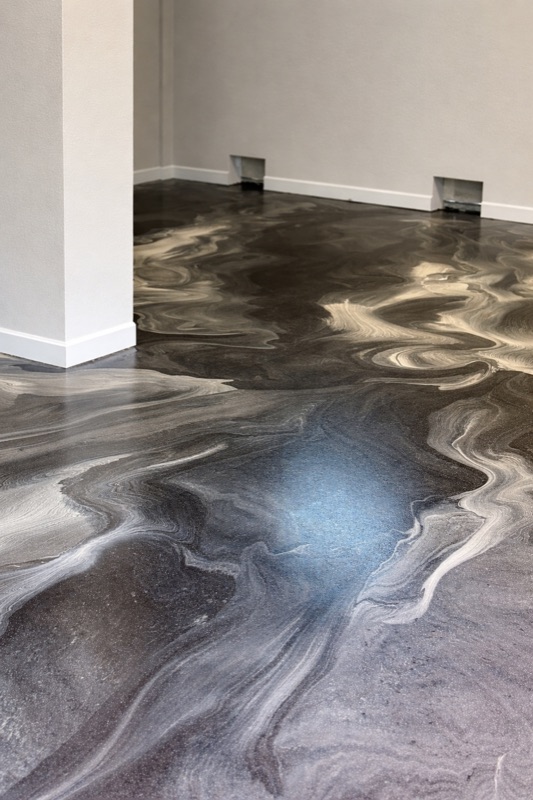
- Moisture-mitigation epoxy primers are rated for slabs that never fully dry — standard on our post-flood installs near the coast and on canal-front properties in Cape Coral.
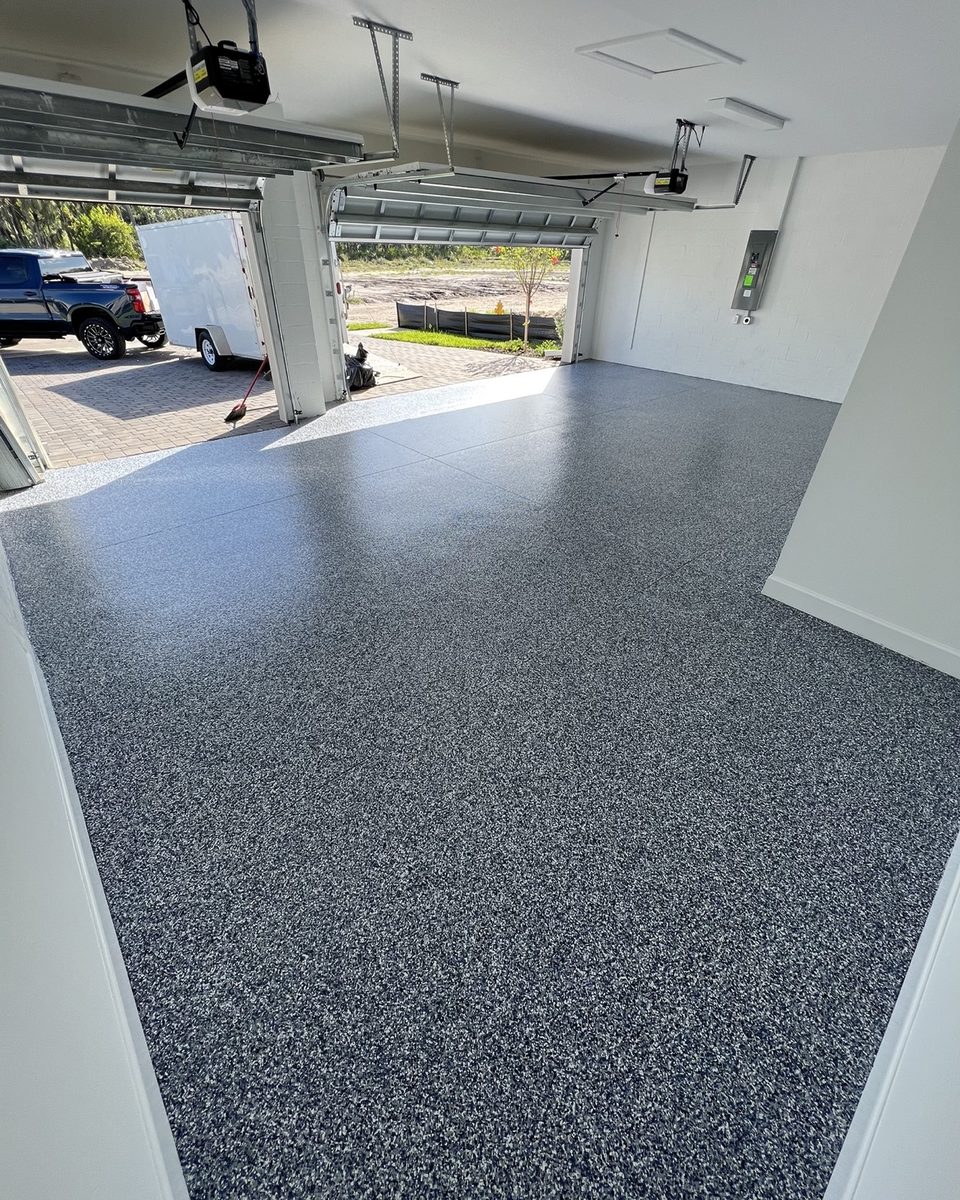
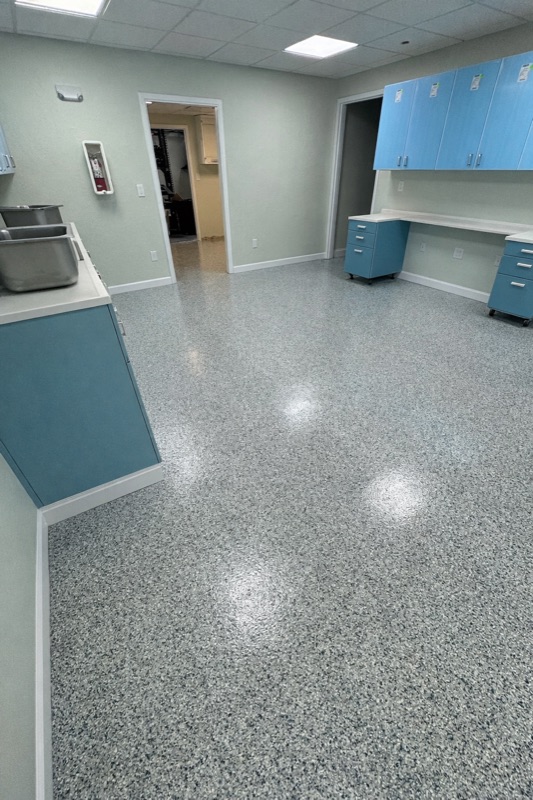
- 100% solids epoxy with flake or quartz broadcast is the workhorse for garages and commercial spaces: seamless, washable, and unaffected by the next wet season's humidity. See our decorative flake and quartz epoxy systems.
- Cementitious urethane tolerates higher substrate moisture than almost any resin system — often the answer for commercial kitchens and food facilities rebuilding after water damage.
- What to avoid: vinyl, laminate, and glue-down floors in flood-prone ground floors. They trap moisture, grow mold, and end up in a dumpster after the next event. A seamless coated slab can be pressure-washed and disinfected and go right back into service.
Insurance and Documentation
If a claim is involved, document before prep begins: photos of the failed floor, moisture readings, and an itemized scope from your contractor separating flood-necessitated work (coating removal, remediation, moisture mitigation) from optional upgrades. We provide itemized scopes on request for exactly this reason — adjusters process clean paperwork faster.
How Long Does a Flood-Recovery Floor Take?
For a typical two-car garage or small commercial space: one day of grinding, repair, and priming, one day of coating, and 24-72 hours of cure before traffic returns — assuming the slab has dried to workable levels. Surge-flooded slabs sometimes need weeks of drying (with dehumidification) before that clock starts, which is another reason to get moisture readings early rather than guessing.
Rebuilding Smarter, Not Just Newer
The buildings that came back best after Ian were the ones that rebuilt with the next storm in mind: sealed, seamless floors that can be flooded, washed out, and reopened. If your Fort Myers, Cape Coral, Sanibel, or Fort Myers Beach property took water damage — this season or seasons ago — we'll test the slab, tell you honestly what it needs, and put down a floor built for the coast. It's what we do year-round from our Fort Myers base.
Flood-Damaged Floor? Start With a Free Assessment
We'll moisture-test the slab, evaluate the damage, and give you an itemized scope — free, and useful for your insurance claim even if you don't hire us.
Get Free Assessment Call (239) 888-9900