When researching epoxy flooring for your Florida property, you've probably noticed that contractors talk about "commercial" and "residential" epoxy systems. But what's actually different between them? Is commercial epoxy just a marketing term, or are there real differences that matter for your project?
The short answer: yes, there are significant differences in formulation, thickness, durability, and cost. Understanding these differences will help you make the right choice whether you're coating a home garage or a 50,000-square-foot warehouse.
The Key Differences at a Glance
| Factor | Residential Epoxy | Commercial Epoxy |
|---|---|---|
| Total Thickness | 10-20 mils | 20-125+ mils |
| Number of Coats | 2-3 coats | 3-5+ coats |
| Expected Lifespan | 10-15 years | 15-25+ years |
| Traffic Rating | Light to moderate | Heavy to extreme |
| Chemical Resistance | Good | Excellent to extreme |
| Cost per Sq Ft | $3-8 | $5-15+ |
Thickness: The Most Important Difference
The single biggest difference between residential and commercial epoxy is thickness. Thickness is measured in "mils" (1 mil = 1/1000 of an inch):
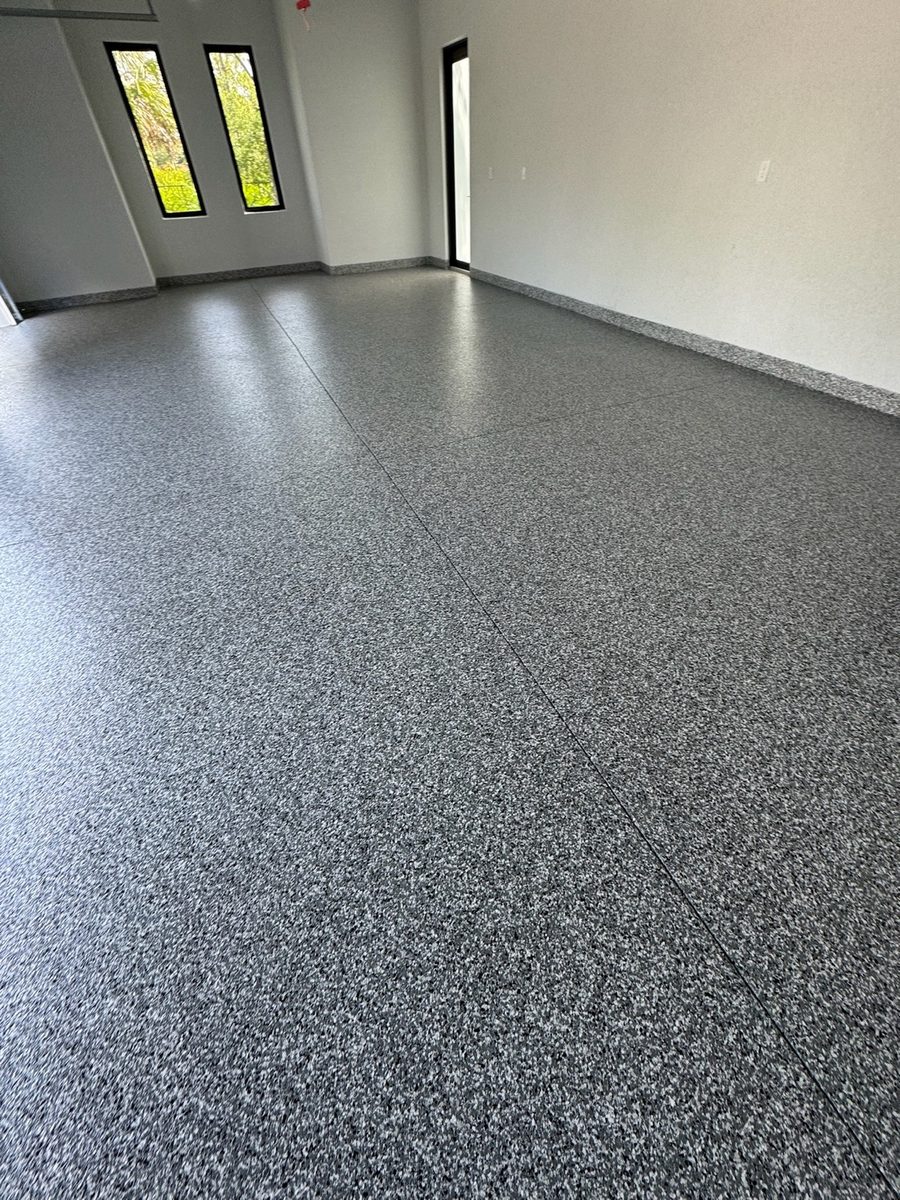
- Residential systems: Typically 10-20 mils total (about the thickness of 2-4 sheets of paper)
- Commercial systems: 20-125+ mils (can be as thick as a credit card or more)
Why does thickness matter? Thicker coatings provide better impact resistance, longer wear life, and superior protection against heavy equipment. A forklift rolling over a thin residential coating will damage it quickly, while a proper commercial system handles that abuse daily for decades.
Formulation Differences
Commercial and residential epoxies often use different chemical formulations:
Residential Epoxy Formulations
- Often water-based or lower-solids formulations
- Easier application (more forgiving of technique)
- Lower VOCs for indoor air quality
- Faster cure times for minimal disruption
- Focus on aesthetics and reasonable durability
Commercial Epoxy Formulations
- 100% solids or high-solids formulations
- Require professional application equipment
- May require ventilation during installation
- Longer cure times for maximum strength
- Engineered for specific performance requirements
Application Process Differences
The installation process differs significantly between residential and commercial projects:
Residential Installation
A typical residential garage floor coating involves:
- Diamond grinding to profile the concrete
- Crack and chip repair
- Primer coat (sometimes combined with base)
- Base coat with decorative flakes
- Clear topcoat for protection
Total installation time: Usually 1-2 days
Commercial Installation
A commercial epoxy installation may include:
- Shot blasting or aggressive diamond grinding
- Moisture testing and mitigation if needed
- Crack injection and concrete repair
- Moisture barrier primer
- Multiple build coats for thickness
- Broadcast media (quartz, flake, or aluminum oxide)
- Grout coat to encapsulate media
- One or more topcoats
- Optional: line striping, safety markings, logos
Total installation time: 3-7+ days depending on size and system
When to Choose Residential Epoxy
Residential epoxy systems are ideal for:
- Home garages: Where you park cars and store items
- Workshops: Light DIY and hobby use
- Laundry rooms: Easy-clean surfaces
- Basements: Moisture-resistant finished floors
- Sunrooms and patios: Decorative, durable surfaces
If your space sees normal household traffic without heavy equipment, forklifts, or industrial chemicals, residential-grade epoxy provides excellent performance at a reasonable cost.
When to Choose Commercial Epoxy
Commercial epoxy systems are necessary for:
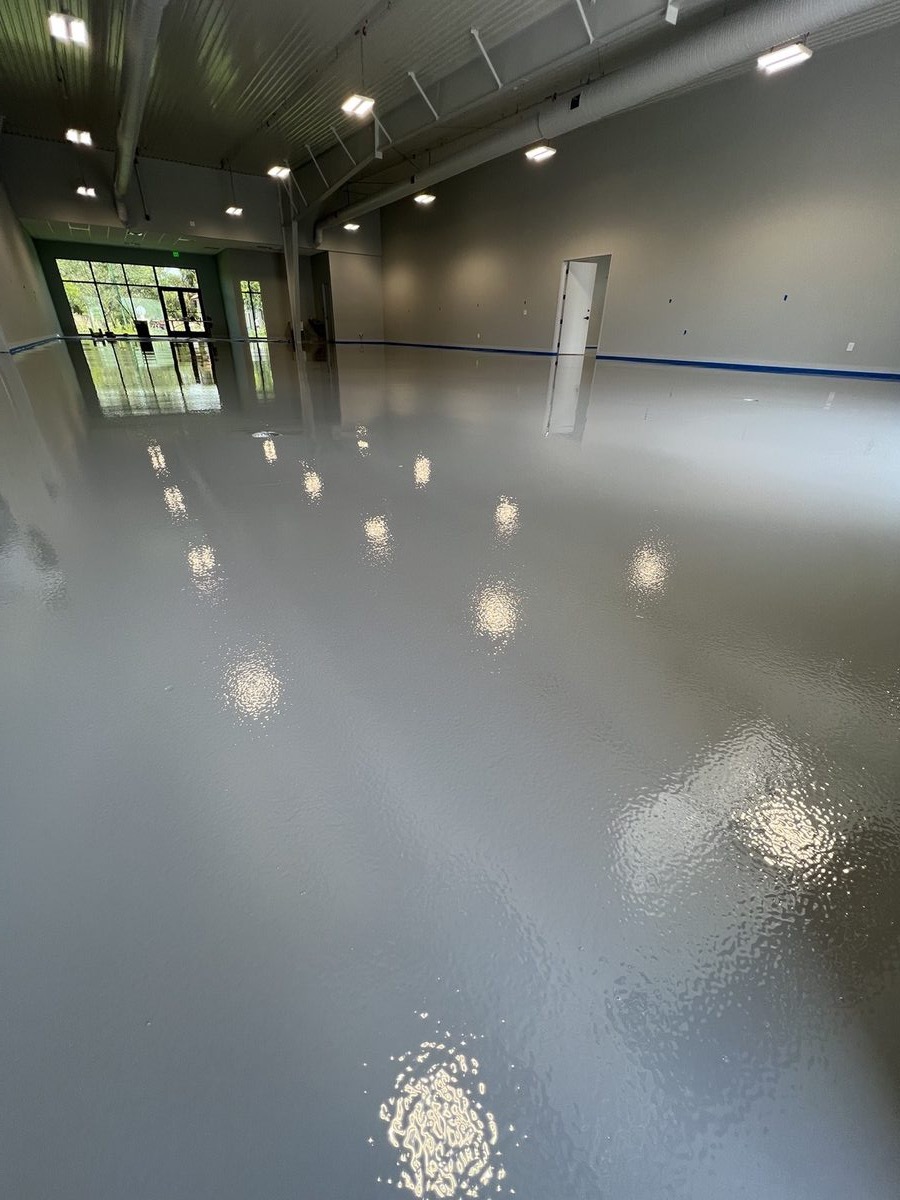
- Warehouses: Forklift traffic, pallet jacks, heavy loads
- Manufacturing facilities: Chemical exposure, extreme traffic
- Auto shops: Oil, solvents, dropped tools
- Restaurants: Health code compliance, constant cleaning
- Retail stores: High foot traffic, rolling carts
- Medical facilities: Sanitation requirements
- Aircraft hangars: Jet fuel, hydraulic fluid, extreme weight
Can You Use Commercial Epoxy in a Home?
Yes, absolutely. Many homeowners with serious workshops, car collections, or home gyms choose commercial-grade systems for their garages. The benefits include:
- Superior durability for heavy equipment
- Better hot tire pickup resistance
- Longer lifespan (25+ years)
- Enhanced chemical resistance for workshop use
The tradeoff is higher cost and longer installation time. If you plan to use your garage as a serious workspace, commercial-grade may be worth the investment.
Can You Use Residential Epoxy in a Business?
This is where we advise caution. Using residential-grade epoxy in a commercial setting often leads to:
- Premature wear and peeling
- Hot tire marks from delivery vehicles
- Chemical damage from cleaning products
- Costly repairs or full replacement within 2-5 years
The initial savings of residential-grade coating rarely justify the early failure in commercial environments.
Cost Comparison
Here's what you can expect to pay in the Florida market:
Residential Epoxy (Per Square Foot)
- Basic solid color: $3-5
- Decorative flake system: $5-7
- Metallic epoxy: $8-12
Commercial Epoxy (Per Square Foot)
- Standard commercial system: $5-8
- Heavy-duty quartz broadcast: $8-12
- Chemical-resistant system: $10-15+
- Urethane cement (extreme duty): $15-25+
Use our cost calculator to get a more accurate estimate for your specific project.
Making the Right Choice
Here's our recommendation process:
- Assess your traffic: What will drive or roll on the floor?
- Consider chemicals: What might spill on the floor?
- Think long-term: How long do you need this floor to last?
- Budget appropriately: Commercial costs more upfront but lasts longer
- Get professional advice: We'll assess your space and recommend the right system
Specialty Systems for Unique Needs
Beyond standard commercial and residential epoxy, there are several specialized coating systems designed for environments with extreme demands. Understanding these options can help you make a more informed decision, especially if your Florida property faces unusual conditions.
Urethane Cement (Cementitious Urethane)
Urethane cement is the most durable floor coating available and is the go-to solution for the most punishing environments. It is commonly used in commercial kitchens, food and beverage processing plants, pharmaceutical facilities, and chemical manufacturing areas. What makes urethane cement stand apart is its exceptional thermal shock resistance. It can withstand sudden temperature swings from boiling water to freezing without cracking or delaminating. In Florida, this makes it ideal for restaurant kitchens where hot water and steam cleaning are daily occurrences, as well as industrial facilities that deal with thermal cycling from heavy machinery.
Urethane cement systems are typically applied at 1/4 inch thick, making them significantly thicker than even heavy-duty epoxy. They bond to concrete with extraordinary strength and can be installed over damp substrates, which is a considerable advantage in Florida where moisture is a constant concern. The tradeoff is higher cost, typically $15-25+ per square foot, and a longer installation timeline.
Methyl Methacrylate (MMA) Coatings
MMA coatings cure extremely fast, often within one to two hours, regardless of temperature. This rapid cure time makes them invaluable for businesses that cannot afford extended shutdowns. A retail store, hospital corridor, or busy warehouse in Orlando or Fort Myers can have a new floor applied and returned to full service within the same day. MMA systems also perform well in cold storage environments, though this is less common in Florida.
The primary drawback of MMA is the strong odor during installation. The application requires proper ventilation, and adjacent occupied spaces may need to be temporarily vacated. Despite this inconvenience, MMA is an excellent choice when downtime costs outweigh the premium in material pricing.
Polyaspartic Coatings
Polyaspartic coatings have become one of the most popular choices for both residential and commercial applications in Florida. They offer UV stability that traditional epoxies lack, making them essential for any space with sun exposure, including garages with open doors, outdoor patios, and pool decks. Polyaspartics cure quickly, allowing return to service within 24 hours in most cases, and they provide excellent abrasion and chemical resistance.
In our installations, we frequently use polyaspartic as the topcoat over an epoxy base. This combination gives you the superior bonding and build thickness of epoxy with the UV protection and fast return-to-service time of polyaspartic. It is one of the best all-around systems for Florida conditions.
Polyurea Coatings
Polyurea is similar to polyaspartic but offers even faster cure times and greater flexibility. It is often used for waterproofing applications, truck bed liners, and areas where the substrate is prone to movement. In Florida, polyurea is particularly useful for coating expansion joints, crack repairs, and areas where concrete movement from the sandy soil is a known issue. Some high-performance garage floor systems use a polyurea base for its flexibility combined with a polyaspartic topcoat for UV protection and aesthetics.
Choosing the Right Specialty System
Selecting the right specialty system depends on the specific challenges your space presents. Here is a quick guide to help you match the system to your situation:
- Extreme heat or thermal shock: Urethane cement
- Minimal downtime required: MMA or polyaspartic
- UV exposure (outdoor or semi-outdoor): Polyaspartic
- Flexible substrate or heavy cracking: Polyurea
- Food-grade or pharmaceutical compliance: Urethane cement or USDA-approved epoxy
During our free consultation, we evaluate your facility's specific requirements and recommend the system that delivers the best combination of performance, longevity, and value. Whether your project is a two-car garage in Cape Coral or a 100,000-square-foot distribution center in Lakeland, we have the expertise and materials to get the job done right.
Not Sure Which System You Need?
Contact Epoxy Creations for a free consultation. We'll assess your space, understand your needs, and recommend the right epoxy system for your specific situation.
Get Free Estimate Call (239) 888-9900