When it comes to protecting and beautifying your Florida garage floor, two coating options dominate the market: epoxy and polyurea. Both are excellent garage floor coatings that offer significant advantages over bare concrete, but each has unique characteristics that may make one better suited for your specific needs.
What is Epoxy Flooring?
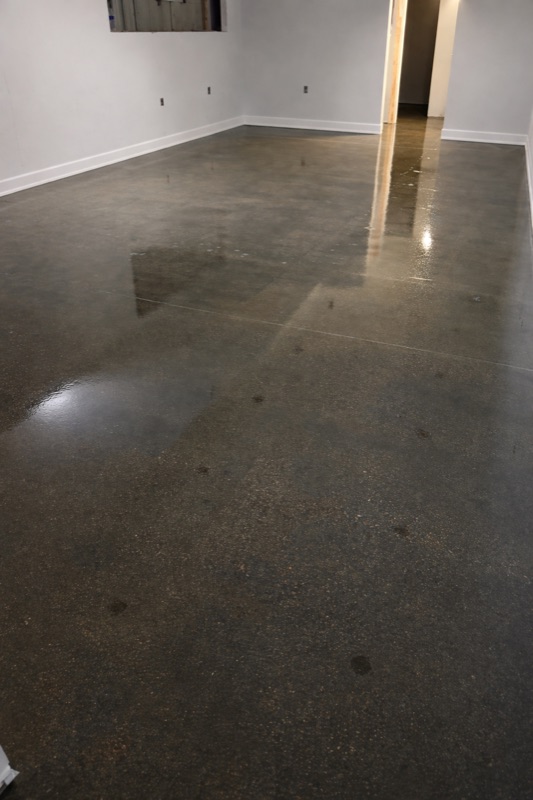
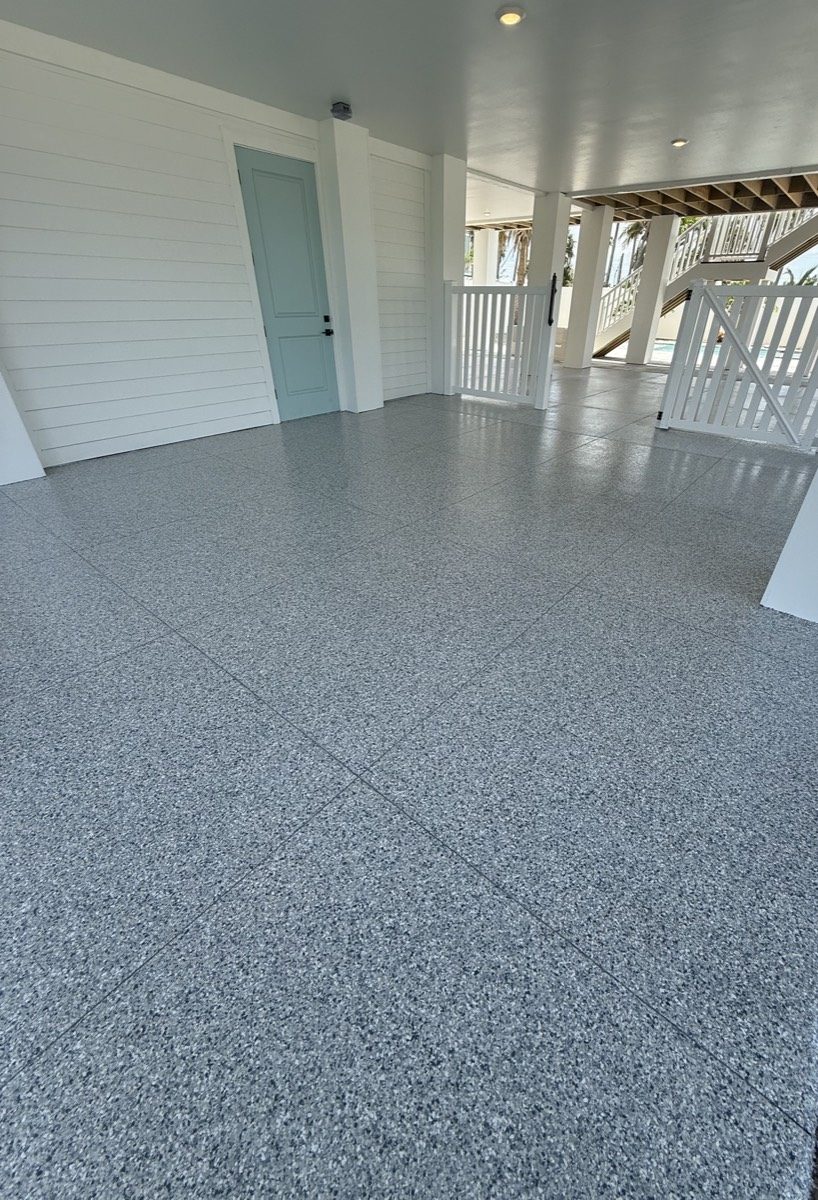
Epoxy is a thermosetting resin that, when mixed with a hardening agent, creates a rigid plastic material that bonds exceptionally well to concrete. It's been the industry standard for garage floor coatings for decades and remains popular due to its proven performance and cost-effectiveness.
What is Polyurea?
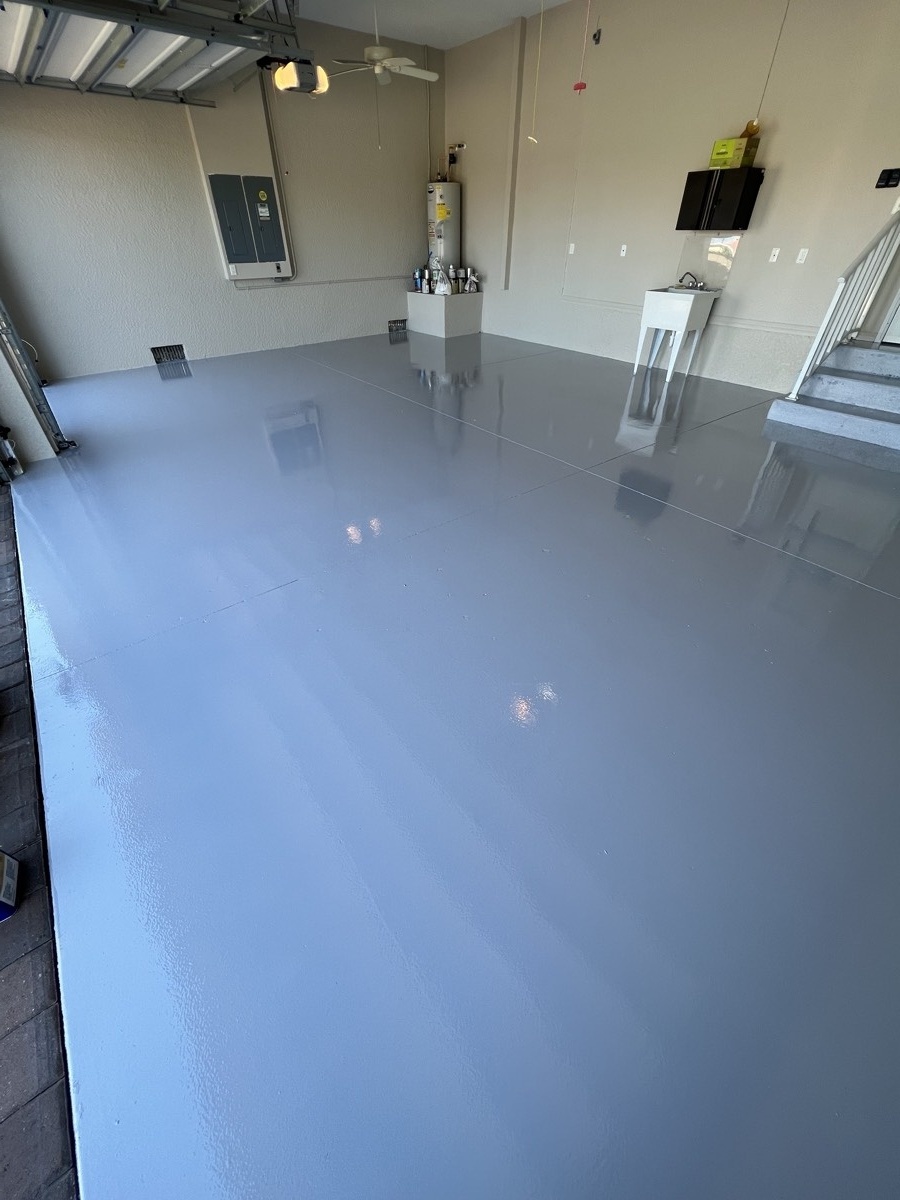
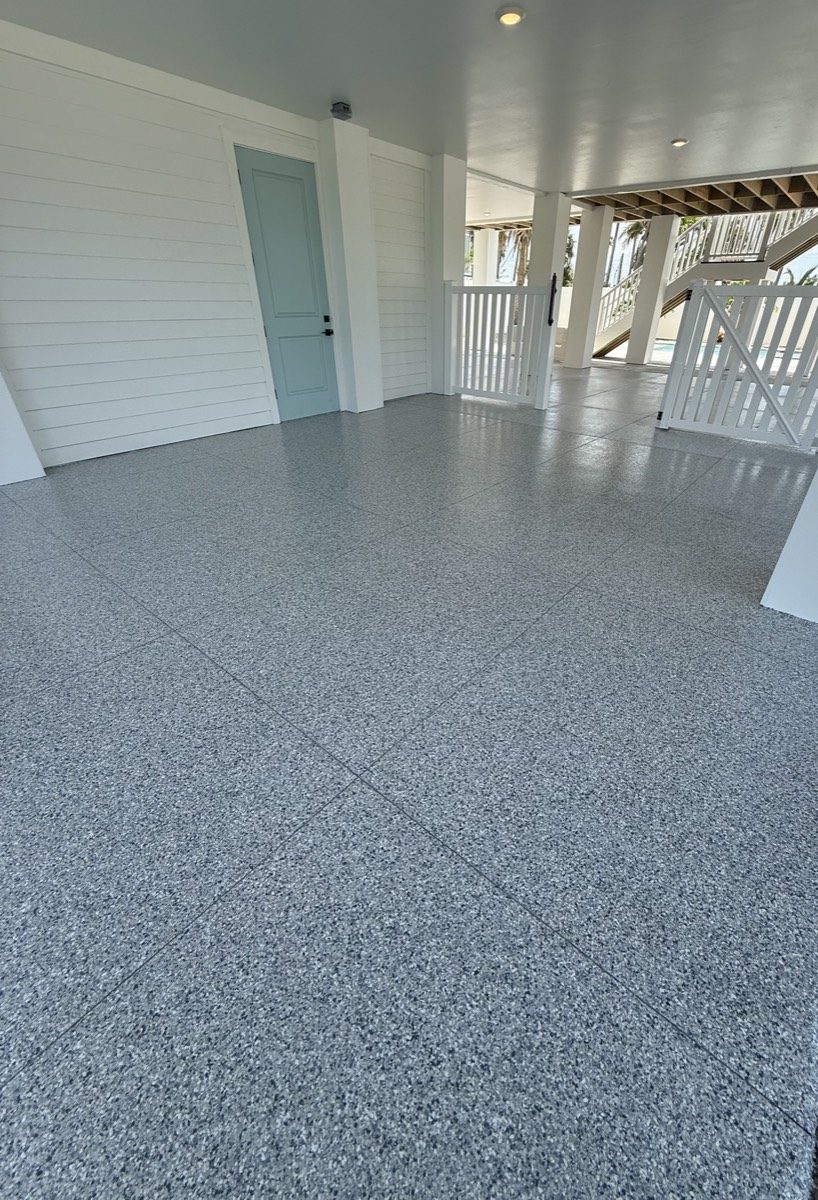
Polyurea is a newer technology that creates a flexible, rubber-like coating. It cures much faster than epoxy and offers superior flexibility, making it more resistant to impacts and temperature fluctuations.
Understanding the Chemistry
Before diving into the comparison, it helps to understand how each coating works at a chemical level. The way epoxy and polyurea bond to concrete and cure is fundamentally different, and those differences directly affect performance in Florida conditions.
How Epoxy Bonds and Cures
Epoxy is a two-part thermosetting polymer. When you mix the resin (Part A) with the hardener (Part B), a chemical reaction called cross-linking begins. The molecules form a dense, rigid network that mechanically bonds to the pores and profile of the concrete substrate. This reaction is exothermic, meaning it generates heat as it cures. In Florida's warm temperatures, this reaction can accelerate, which is why professional installers carefully manage pot life and application timing. Full cross-linking typically takes five to seven days, after which the coating reaches its maximum hardness and chemical resistance.
How Polyurea Bonds and Cures
Polyurea is formed through a reaction between an isocyanate component and a resin blend. Unlike epoxy's gradual cure, polyurea reacts almost instantly once the two components meet, often reaching a tack-free state within seconds to minutes. This rapid reaction means polyurea is typically applied using specialized plural-component spray equipment that mixes the materials at the spray tip. The resulting coating is more flexible and elastic than epoxy, which gives it superior impact resistance and the ability to bridge hairline cracks in the concrete. Because the reaction happens so quickly, polyurea is far less sensitive to humidity during application, a meaningful advantage in the Florida climate.
Florida Climate Considerations
Florida's climate presents challenges that homeowners in drier, cooler states simply do not face. When choosing between epoxy and polyurea for your garage floor, it is important to understand how each coating performs under the conditions specific to our region.
Humidity and Moisture Vapor
Florida's average relative humidity hovers between 70% and 90% for much of the year. High humidity can interfere with epoxy's curing process, potentially causing blushing, a milky or cloudy appearance on the surface. Professional installers address this by monitoring dew point and concrete moisture levels before application, and by using moisture-mitigating primers when needed. Polyurea is far less affected by ambient humidity since its rapid gel time gives moisture little opportunity to interfere with the cure. For garages in coastal areas like Cape Coral, Naples, or Marco Island, where salt air adds additional moisture to the equation, this advantage can be significant.
Salt Air and Coastal Exposure
Homes within a few miles of the Gulf or Atlantic coast are exposed to salt-laden air that can accelerate corrosion and degrade certain materials over time. Both epoxy and polyurea provide excellent barriers against salt penetration into the concrete, but polyurea's superior flexibility means it is less likely to microcrack over time, which could otherwise allow salt moisture to reach the substrate. If your garage door is frequently open and exposed to coastal breezes, this is a factor worth considering.
Seasonal Temperature Swings
While Florida does not experience extreme cold, garage floor surfaces can see temperatures ranging from the upper 40s on a rare winter morning to well over 130 degrees on sun-baked concrete in July. This thermal cycling causes concrete to expand and contract. Polyurea's inherent flexibility allows it to move with the concrete without cracking or delaminating. Epoxy, being a more rigid coating, can handle moderate thermal movement but may develop stress cracks over many years if the concrete slab has significant expansion and contraction. A quality concrete preparation and joint treatment before coating minimizes this risk with either system.
Installation Process Differences
The way epoxy and polyurea are prepped and applied differs in several key ways, and these differences affect scheduling, cost, and the final result.
Surface Preparation
Both coatings require thorough concrete preparation, and this step is equally important regardless of which system you choose. The concrete must be mechanically ground using diamond grinders to create the proper surface profile for adhesion. Cracks, spalling, and divots need to be repaired, and any existing coatings or sealers must be completely removed. For both epoxy and polyurea, surface prep accounts for roughly 50% of the total project time and is the single most important factor in long-term coating performance.
Application Method
Epoxy is typically applied by hand using rollers and squeegees. The installer mixes measured quantities of resin and hardener, then spreads the material across the floor in sections. This hands-on approach gives the installer precise control over thickness and allows for decorative techniques like metallic epoxy effects or broadcast flake systems. Working time is usually 20 to 40 minutes per batch depending on temperature.
Polyurea, due to its extremely fast reaction time, is usually applied with heated, plural-component spray equipment. The two components are mixed at the spray gun tip and immediately applied to the surface. This requires specialized equipment and training, which is one reason polyurea installations tend to cost more. Some polyaspartic polyurea variants offer longer working times and can be applied by roller, making them popular for topcoat applications in hybrid systems.
Number of Coats and Drying Between Layers
A typical epoxy garage floor system involves two to three coats: a primer, a color or decorative base coat, and a clear topcoat. Each coat requires 12 to 24 hours of cure time before the next layer can be applied, meaning a full epoxy installation usually spans two to three days of on-site work. Polyurea systems can often be applied in fewer coats with much shorter recoat windows, sometimes as little as two to four hours between layers. This means a polyurea-only system can sometimes be completed in a single day.
Head-to-Head Comparison
Cure Time
- Epoxy: 24-72 hours before light foot traffic; 5-7 days for full cure
- Polyurea: Walk-on ready in 24 hours; full cure in 1-2 days
Winner: Polyurea - If you need your garage back quickly, polyurea is the clear choice.
Durability
- Epoxy: Excellent hardness, highly scratch-resistant, but can chip under heavy impact
- Polyurea: More flexible, better impact resistance, less likely to chip or crack
Winner: Tie - Both are extremely durable for different reasons. Epoxy is harder; polyurea is more flexible.
Heat Resistance (Critical for Florida)
- Epoxy: Excellent hot tire resistance with proper topcoat; handles Florida heat well
- Polyurea: Superior heat resistance; won't yellow or peel from hot tires
Winner: Polyurea - Slightly better for Florida's extreme heat, especially in garages without AC. Whether you're looking for epoxy flooring in Fort Myers or epoxy flooring in Orlando, we can help you choose the right coating for your climate.
UV Stability
- Epoxy: Can yellow over time with UV exposure; requires UV-stable topcoat for outdoor/sunny areas
- Polyurea: Naturally UV-stable; won't yellow or fade
Winner: Polyurea - Better choice for garages with sun exposure.
Cost
- Epoxy: $3-7 per square foot installed
- Polyurea: $5-10 per square foot installed
Winner: Epoxy - More budget-friendly while still providing excellent performance.
Aesthetic Options
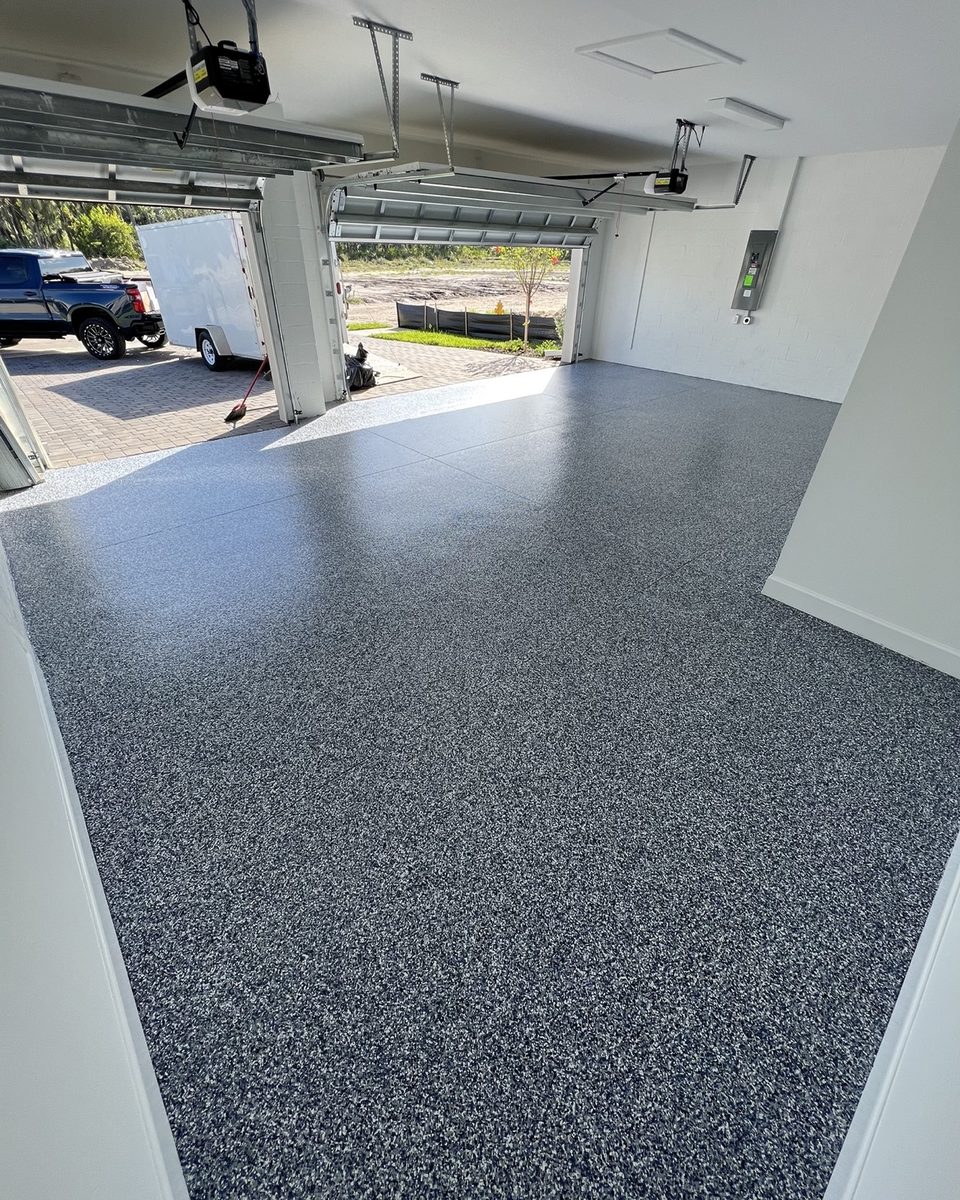
- Epoxy: Unlimited colors, metallic options, flake systems, custom designs
- Polyurea: Good color selection, works with flake systems, but fewer decorative options than epoxy
Winner: Epoxy - More design flexibility, especially for metallic and custom finishes.
Long-Term Performance in Florida
Having installed hundreds of garage floor coatings across Southwest and Central Florida, we have had the opportunity to observe how both epoxy and polyurea systems perform over time in real-world conditions.
Well-installed epoxy floors in Florida garages consistently perform excellently for 10 to 15 years and often longer. The most common issue we see with aging epoxy is minor yellowing in areas that receive direct sunlight, particularly near garage doors that are left open during the day. This is a cosmetic concern rather than a structural one, and it can be prevented entirely by using a UV-stable polyaspartic topcoat.
Polyurea-only systems show exceptional resistance to yellowing and maintain their color and gloss well over time. Their flexibility means they handle the subtle settling and movement of Florida's sandy soil foundations without showing stress cracks. However, polyurea coatings can be more susceptible to surface scratching from dragged items since they are softer than fully cured epoxy.
In both cases, proper floor maintenance extends the life of the coating significantly. Homeowners who keep their garage floors clean and address spills promptly can expect either system to last well beyond a decade.
When to Choose a Hybrid System
For most Florida homeowners, we recommend a hybrid system that combines the best qualities of both epoxy and polyurea. This approach has become our most popular installation because it addresses the specific demands of Florida's climate while delivering outstanding aesthetics and durability.
How a Hybrid System Works
A hybrid system uses an epoxy base coat for the foundation and decorative layer, then finishes with a polyurea or polyaspartic topcoat as the protective surface. Here is the typical layering:
- Layer 1 - Moisture-mitigating primer: Seals the concrete and prevents moisture vapor transmission
- Layer 2 - 100% solids epoxy base coat: Provides the color, decorative flake, or metallic effect and delivers maximum adhesion to the prepared concrete
- Layer 3 - Polyaspartic clear topcoat: Adds UV stability, chemical resistance, and a high-gloss or satin finish that will not yellow over time
Why This Combination Works Best in Florida
The epoxy base coat bonds deeply into the concrete pores and provides a rigid, hard-wearing foundation. It also allows for the widest range of decorative options, from full-broadcast vinyl flake to custom metallic swirls. The polyaspartic topcoat then shields that decorative layer from UV degradation, hot tire pickup, and the chemical exposure that garage floors routinely encounter. This layered approach gives you the design flexibility of epoxy with the weather resistance of polyurea.
Who Should Consider a Hybrid System
A hybrid system is the right choice if you want the broadest range of decorative options, need strong UV protection because your garage receives direct sunlight, or simply want the longest-lasting coating system available. Whether you are in Fort Myers, Bonita Springs, Orlando, or anywhere in between, the hybrid approach is engineered to handle what Florida throws at it.
The Bottom Line
Both epoxy and polyurea are excellent choices for Florida garage floors. Your decision should be based on:
- Budget: Choose epoxy for cost savings
- Time constraints: Choose polyurea if you need fast installation
- Aesthetics: Choose epoxy for metallic or custom designs
- Maximum durability: Consider a hybrid system
Need Help Deciding?
Our experts can evaluate your garage and recommend the best coating system for your needs and budget. Contact us for a free consultation and estimate.
Get Free Estimate Call (239) 888-9900