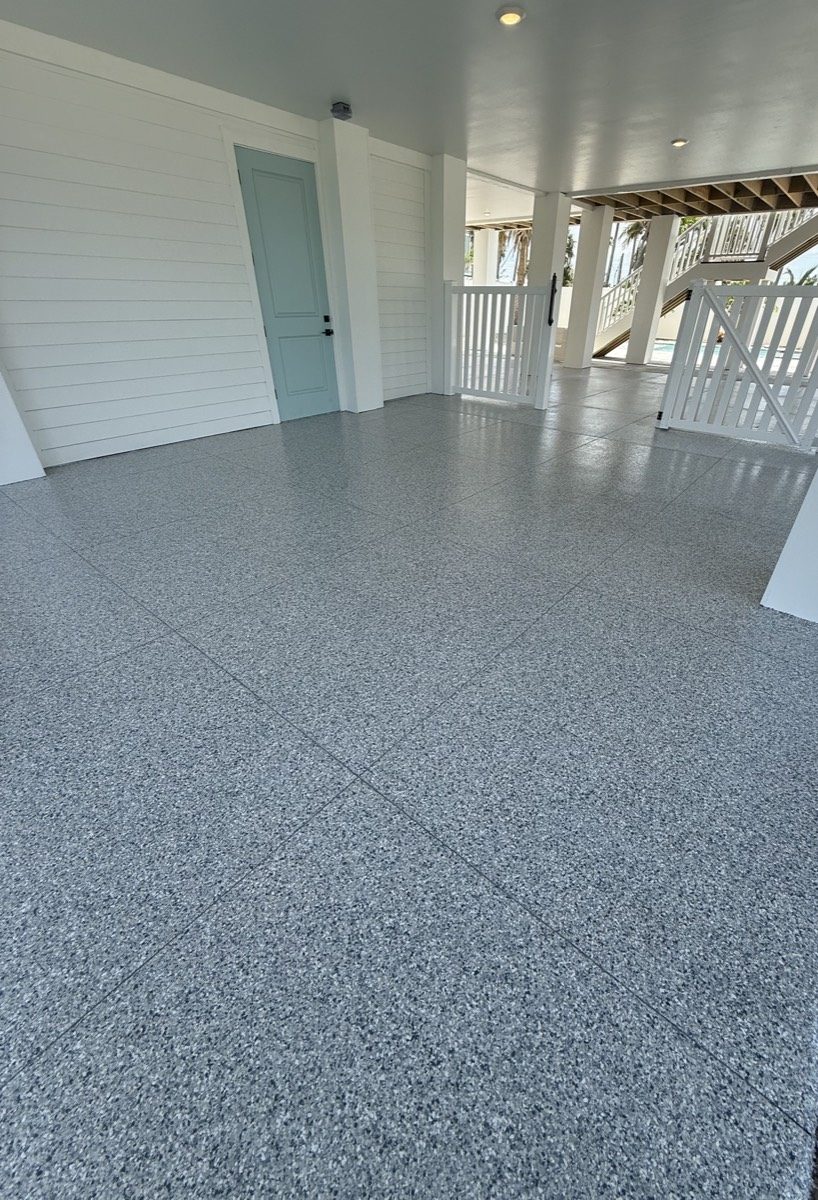
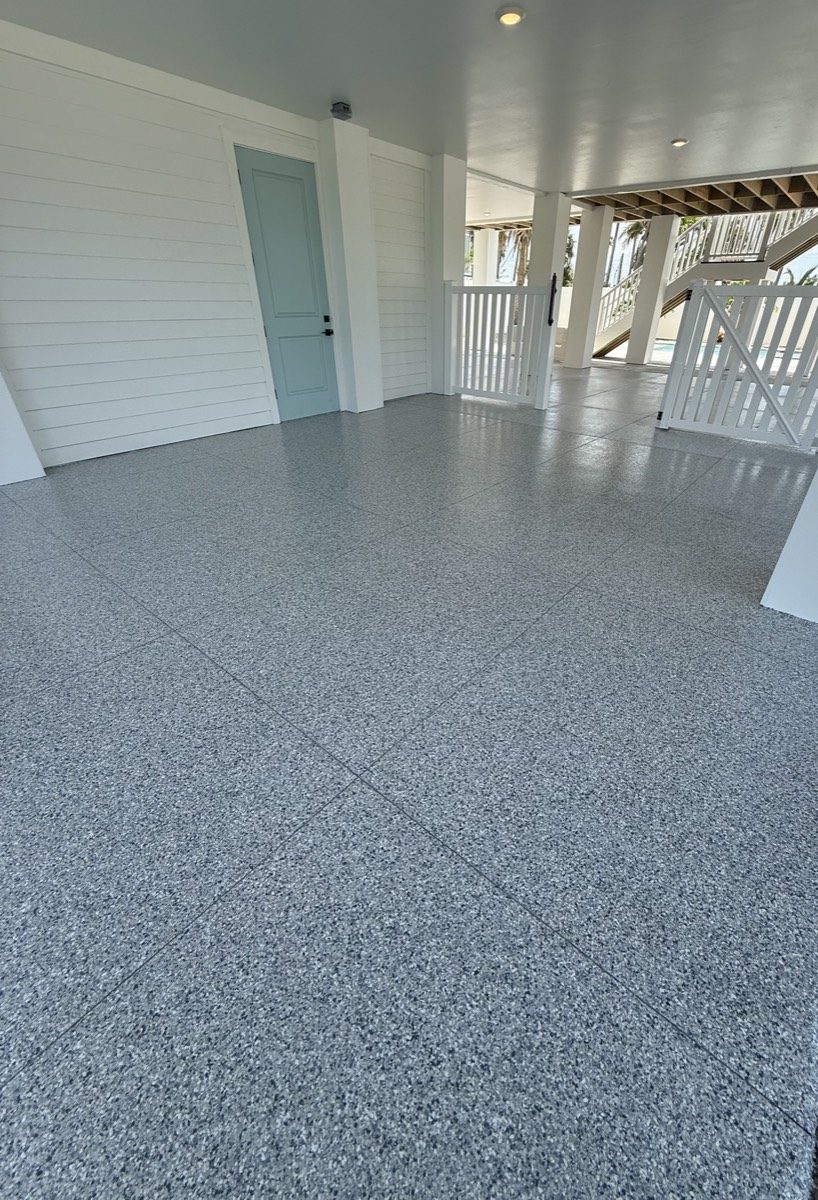
Florida homeowners know that outdoor living spaces are just as important as indoor ones. With pool decks, lanais, and patios seeing heavy use year-round, having a durable, attractive, and safe surface is essential. Epoxy and polyaspartic coatings offer a fantastic solution for transforming worn concrete into beautiful, functional outdoor spaces.
Here's everything you need to know about using epoxy-based coatings on your Florida pool deck or patio.
Why Consider Epoxy for Outdoor Spaces?
Traditional concrete pool decks in Florida face serious challenges:
- Cracking: Florida's expansive clay soils cause concrete movement
- Staining: Sunscreen, food, drinks, and organic matter leave marks
- Fading: Intense UV exposure bleaches colored concrete
- Slipping: Wet concrete can be dangerously slippery
- Heat: Dark or bare concrete gets painfully hot
A properly formulated outdoor coating system addresses all of these issues while dramatically improving appearance.
Best Coating Types for Pool Decks and Patios
Polyaspartic Coatings (Recommended)
For outdoor applications in Florida, we typically recommend polyaspartic coatings over traditional epoxy because:
- 100% UV stable: Won't yellow or fade in Florida sun
- Flexible: Moves with concrete without cracking
- Fast cure: Can be walked on within hours
- Chemical resistant: Handles pool chemicals, sunscreen, food
- Temperature tolerant: Applies and performs well in Florida heat
Decorative Flake Systems
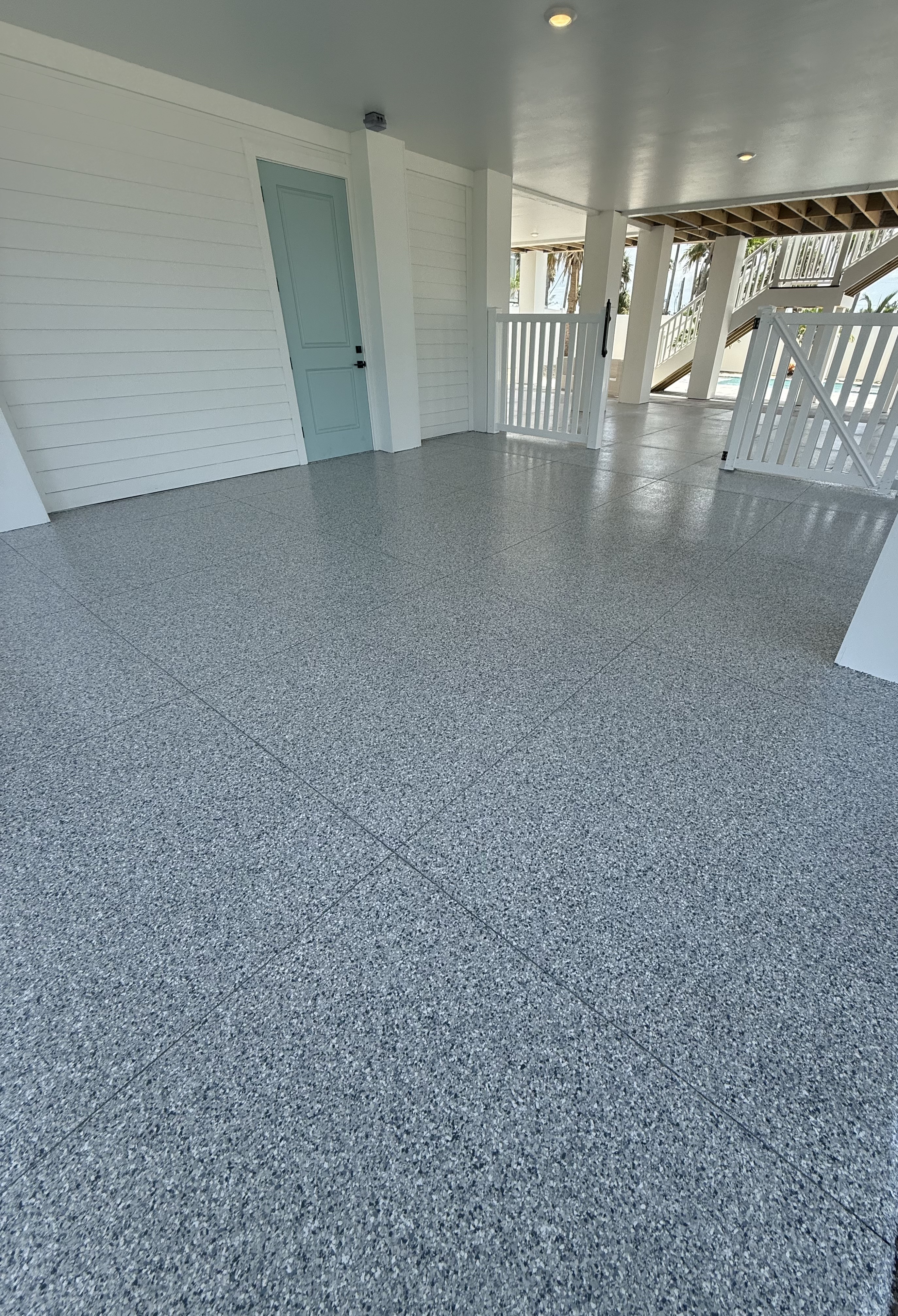
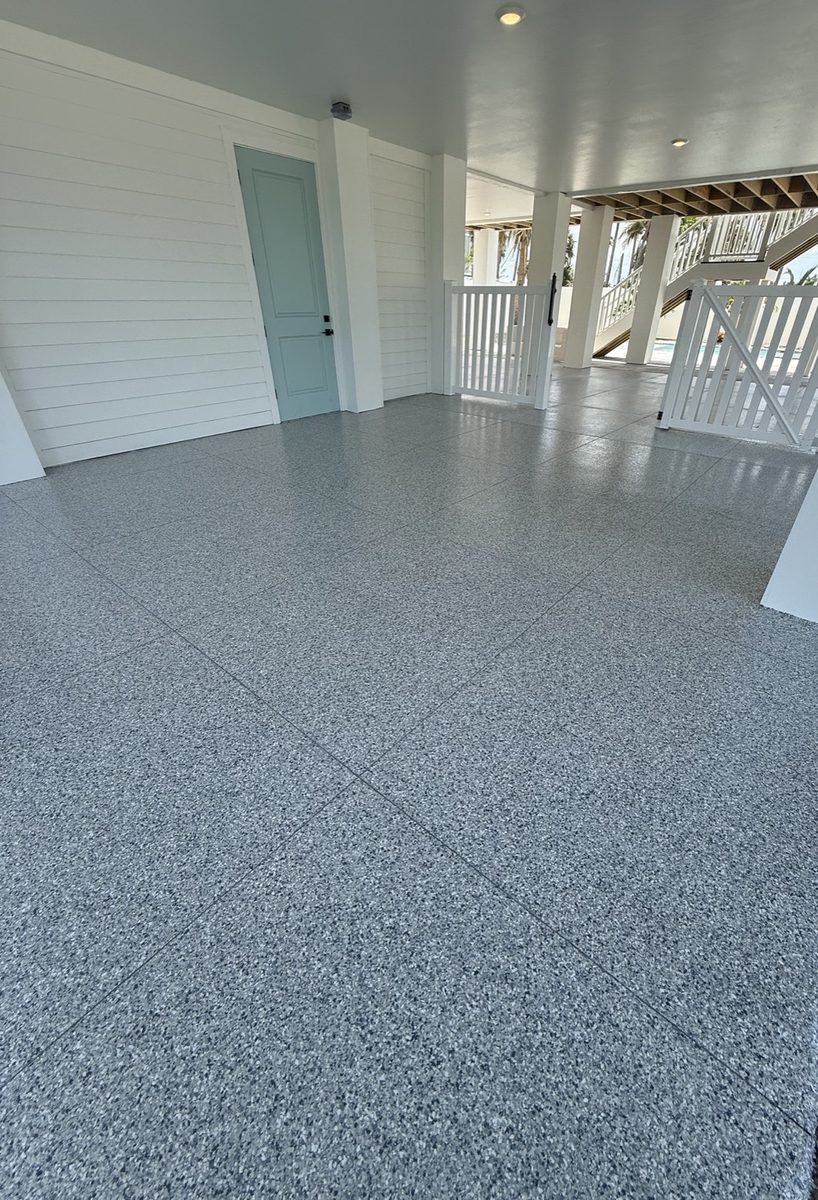
Our decorative flake coatings are extremely popular for pool decks because:
- Flakes create natural texture for slip resistance
- Multi-color blends hide dirt and imperfections
- Wide range of colors to match your home
- Cooler than solid colors due to light reflection
Cool Deck Coatings
Specially formulated coatings with heat-reflective properties can reduce surface temperature by 20-30°F compared to uncoated concrete—a huge benefit for barefoot comfort in Florida summers.
Essential Features for Pool Deck Coatings
Slip Resistance
Safety is paramount around pools. We incorporate slip resistance through:
- Broadcast aggregates: Fine sand or polymer beads in the topcoat
- Textured flakes: Decorative flakes create natural grip
- Shark grip additives: Rubber particles for maximum traction
We calibrate slip resistance based on the area—higher traction near pool edges and diving areas, moderate traction in seating areas for comfort.
UV Stability
Florida's intense sun will quickly destroy coatings that aren't UV stable. Signs of UV damage include:
- Yellowing (especially with clear coats over white/light colors)
- Chalking (surface becomes powdery)
- Delamination (coating separates from concrete)
We use only 100% UV-stable polyaspartic topcoats for outdoor applications.
Water and Chemical Resistance
Pool decks are constantly exposed to:
- Chlorinated or salt water
- Sunscreen and body oils
- Food and beverages
- Cleaning chemicals
Our coatings create a seamless, non-porous barrier that resists all of these and makes cleanup effortless.
Color Options for Pool Decks
Choosing the right color for your pool deck involves balancing aesthetics with practicality:
Light Colors (Recommended)
Light tan, cream, sandstone, and light gray stay significantly cooler in direct sun. These colors also:
- Reflect light for a brighter outdoor space
- Show less fading over time
- Complement most Florida home styles
- Make the pool area feel more spacious
Medium Tones
Medium gray, terra cotta, and taupe balance heat absorption with dirt hiding. Good choices for covered areas or partial shade.
Dark Colors
Dark colors like charcoal or brown can get uncomfortably hot in Florida sun. Only recommended for:
- Fully covered patios
- Accent borders (not main walking surfaces)
- Areas with significant shade
Popular Pool Deck Color Combinations
- Coastal Sand: Tan base with cream and brown flakes
- Cool Gray: Light gray with white and charcoal flakes
- Tropical Stone: Sandstone with terra cotta accents
- Key West: White base with blue and teal flakes
The Pool Deck Coating Process
Here's what to expect when we coat your pool deck or patio:
Day 1: Preparation
- Pressure washing: Remove all dirt, algae, and debris
- Crack repair: Fill and seal all cracks
- Diamond grinding: Create proper surface profile for adhesion
- Concrete repair: Fix chips, spalls, and damaged areas
Day 2: Coating Application
- Primer: Penetrating primer for maximum adhesion
- Base coat: Colored polyaspartic base layer
- Flake broadcast: Decorative flakes applied while wet
- Topcoat: UV-stable clear coat with slip-resistant additive
Day 3: Finishing
- Final topcoat application (if using double topcoat system)
- Edge detailing and cleanup
- Light foot traffic typically OK within 24 hours
- Full use (furniture, pool use) within 72 hours
Pool Deck vs. Garage Floor: Key Differences
While we use similar technologies, pool deck coatings differ from garage floors in several ways:
| Factor | Garage Floor | Pool Deck |
|---|---|---|
| UV Exposure | Minimal | Constant, intense |
| Water Exposure | Occasional | Constant |
| Slip Resistance | Moderate | Critical |
| Heat Concerns | Hot tire pickup | Surface temperature |
| Primary Coating | Epoxy + polyaspartic | 100% polyaspartic |
Maintenance for Coated Pool Decks
One of the best benefits of coated pool decks is easy maintenance:
- Regular cleaning: Hose off or pressure wash as needed
- Stain removal: Most stains wipe up with mild soap
- No sealing required: Unlike stamped concrete or pavers
- Algae resistant: Seamless surface doesn't harbor growth
Most pool decks only need occasional pressure washing to look like new.
Cost of Pool Deck Coatings
Pool deck coating costs typically range from $5-12 per square foot depending on:
- Current condition of the concrete
- Amount of crack repair needed
- Coating system selected
- Decorative options (flakes, patterns, borders)
Compare this to other pool deck options:
- Pavers: $15-30+ per sq ft
- Stamped concrete overlay: $8-15 per sq ft
- Complete concrete replacement: $10-20+ per sq ft
Coating your existing concrete is often the most cost-effective way to get a beautiful, durable pool deck.
Is Your Pool Deck a Good Candidate?
Coatings work well on most concrete pool decks. Good candidates have:
- Structurally sound concrete (not crumbling or severely damaged)
- Stable subgrade (no major settling or heaving)
- Hairline to moderate cracks (we can repair these)
- No major drainage issues
We'll assess your specific situation during our free estimate and let you know if coating is the right solution.
Lanai and Screened Porch Applications
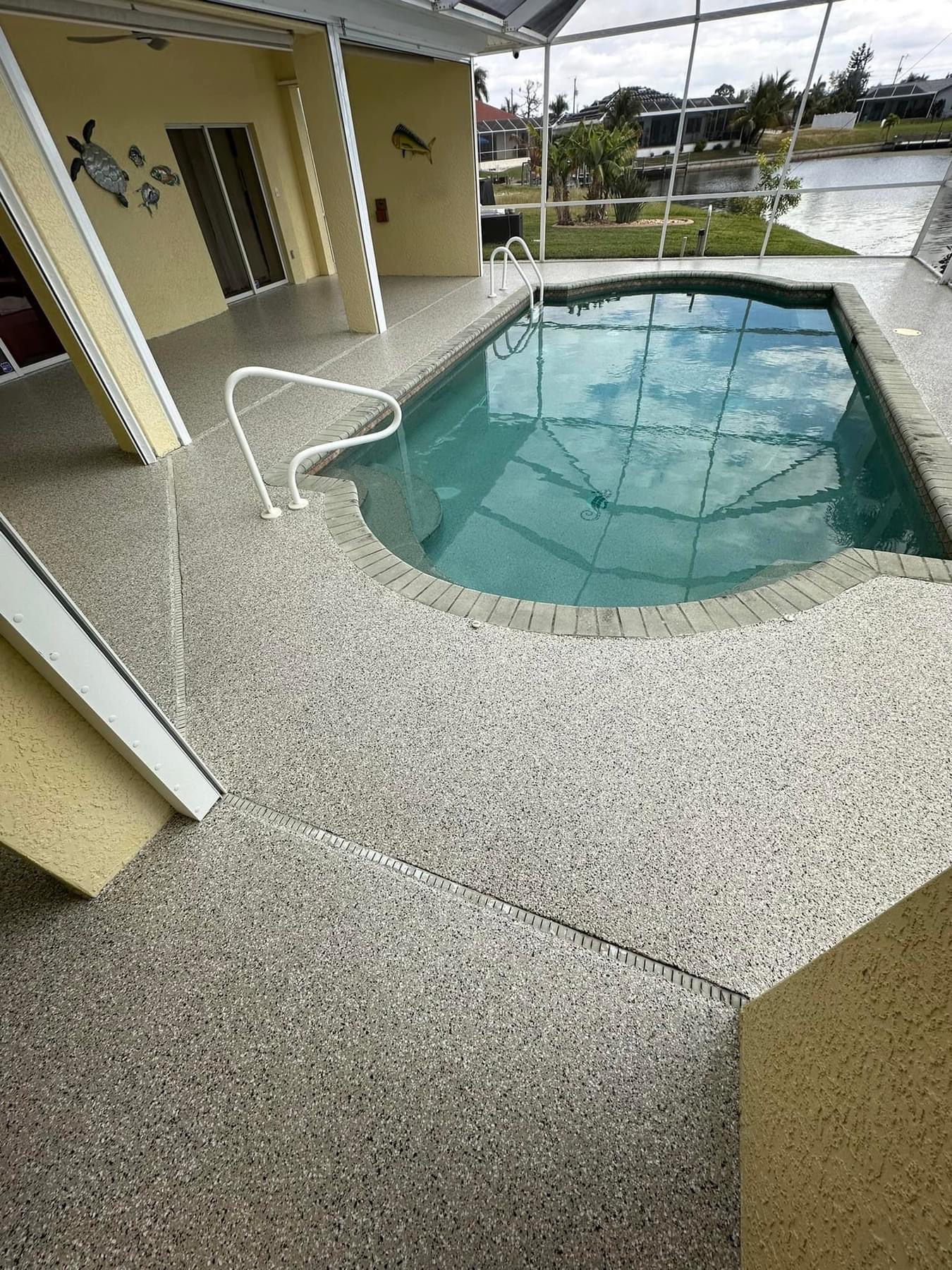
Florida living revolves around outdoor spaces, and for many homeowners across Fort Myers, Naples, Cape Coral, and Orlando, the lanai or screened porch is the most-used room in the house. These enclosed outdoor spaces present a unique set of conditions that make them ideal candidates for epoxy and polyaspartic coatings.
Why Screened Porches Need Special Attention
Screened-in spaces in Florida occupy a middle ground between fully indoor and fully outdoor environments. The screen enclosure blocks direct rain but does not prevent humidity, wind-driven moisture, or temperature fluctuations from reaching the floor. Many lanai floors are exposed to partial sun through the screen, which can cause UV damage to coatings that are not properly rated for outdoor use. Standard interior-grade epoxy will yellow and deteriorate quickly in these semi-exposed conditions.
The concrete in screened porches also tends to develop more cracks than interior slabs. Florida's sandy, shifting soils put constant stress on slab-on-grade construction, and lanai slabs are often thinner than the main home's foundation. Seasonal rains can push moisture through the concrete from below, creating the same adhesion challenges we see with pool decks.
Best Coating Systems for Lanais
For screened porches and lanais, we recommend the same UV-stable polyaspartic systems we use on pool decks. These coatings are specifically formulated to handle the semi-exposed conditions without yellowing, chalking, or delaminating. Key features of a proper lanai coating system include:
- 100% UV-stable topcoat: Essential even with partial screen coverage
- Moisture-tolerant primer: Addresses vapor transmission through the slab
- Flexible base coat: Accommodates concrete movement and cracking
- Moderate slip resistance: Important for areas that may get wet from rain splash-through
Design Considerations for Florida Lanais
Your lanai is an extension of your living space, so the coating should complement your home's overall aesthetic. Many Florida homeowners choose earth-tone decorative flake blends that coordinate with their interior tile or the exterior pool deck. A popular approach is to use the same coating system on both the lanai and pool deck, creating a seamless flow between the two spaces.
Light-colored coatings are especially popular for lanais because they keep the surface cooler underfoot and make the enclosed space feel brighter and more open. Cream, sandstone, and light gray blends work well with most Florida architectural styles, from coastal to Mediterranean.
Common Lanai Flooring Problems We Solve
Over the years, we have transformed hundreds of lanai floors throughout Southwest and Central Florida. The most common issues homeowners bring to us include:
- Stained and discolored concrete: Years of furniture marks, plant pot rings, and spills
- Failed paint or sealer: Peeling and flaking from products not rated for semi-outdoor use
- Algae and mildew growth: Porous concrete in humid conditions harbors organic growth
- Cracked and uneven surfaces: Settling and movement over time
- Hot surface temperatures: Uncoated concrete absorbs heat from afternoon sun
A professionally applied polyaspartic coating addresses every one of these concerns while adding lasting beauty to one of your home's most important living spaces. If you are considering upgrading your lanai alongside a garage floor coating, we often offer combined project pricing that makes it easy to transform multiple spaces at once.
Ready to Transform Your Pool Deck?
Contact Epoxy Creations for a free estimate on your pool deck or patio coating. We'll assess your concrete and recommend the best system for your needs.
Get Free Estimate Call (239) 888-9900