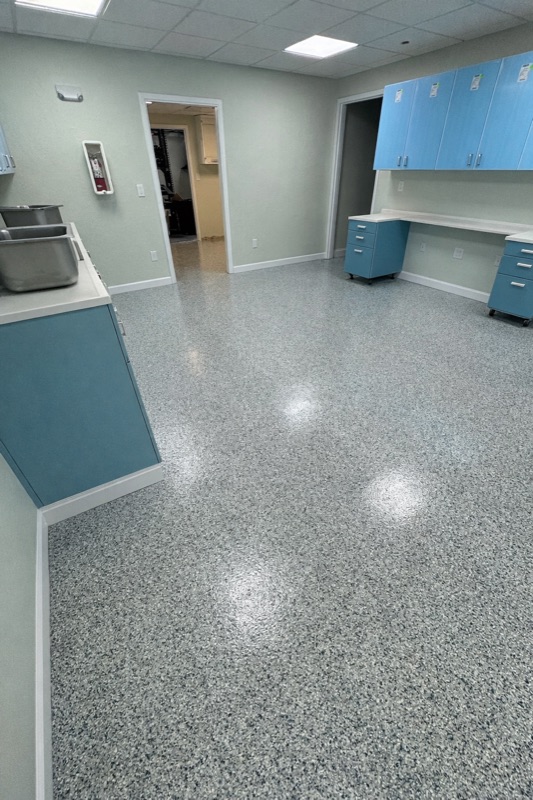
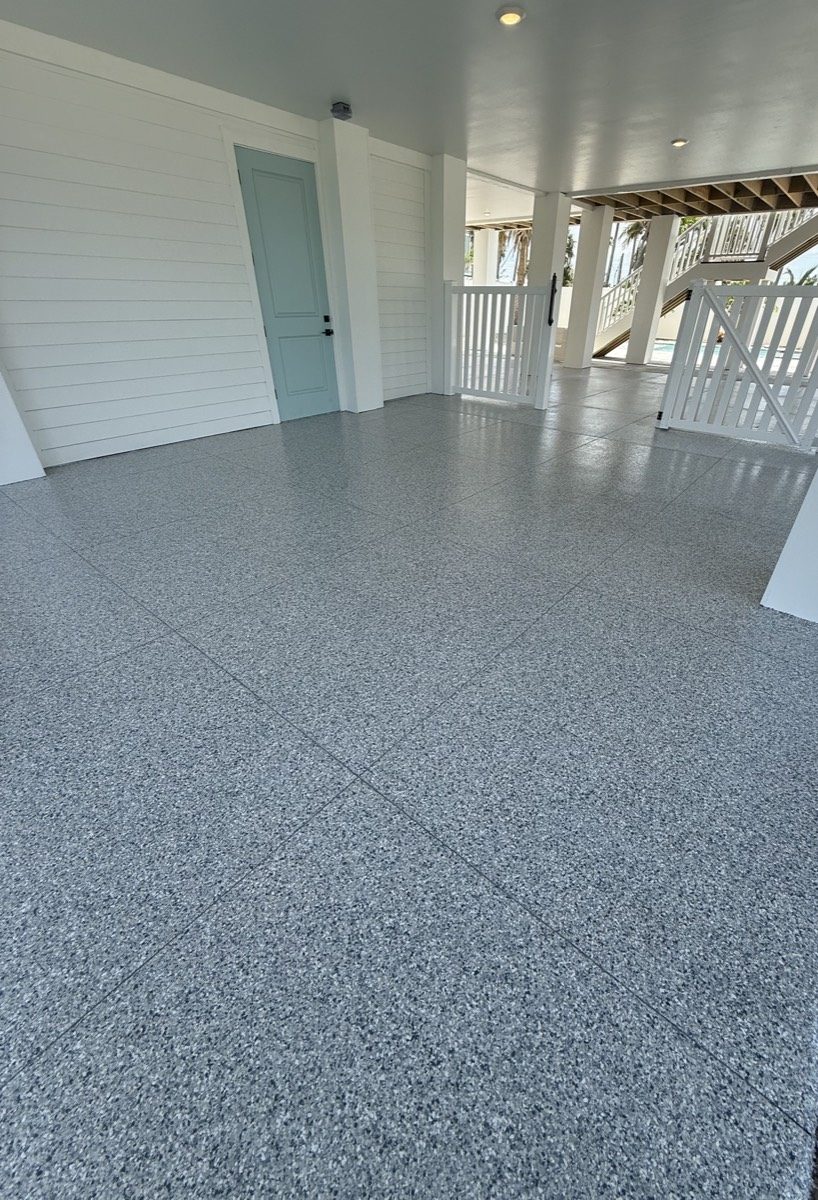
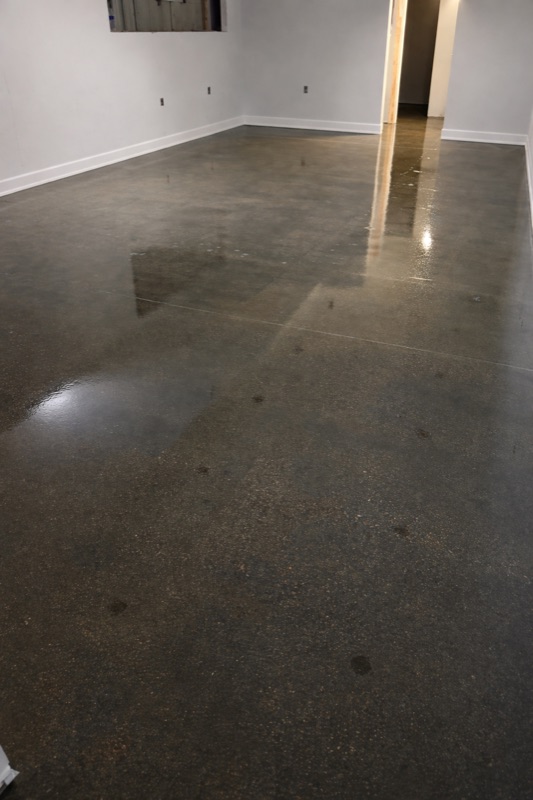
Florida businesses face unique challenges when it comes to flooring. High humidity, heavy foot traffic, and the need for easy cleaning make traditional flooring options less than ideal. That's why more and more Florida business owners are turning to our commercial epoxy services as their go-to solution.
Here are the top five benefits that make epoxy flooring the smart choice for Florida businesses:
1. Exceptional Durability
Commercial epoxy flooring is built to last. Unlike traditional flooring options that wear down quickly under heavy traffic, epoxy creates a rock-hard surface that can withstand:
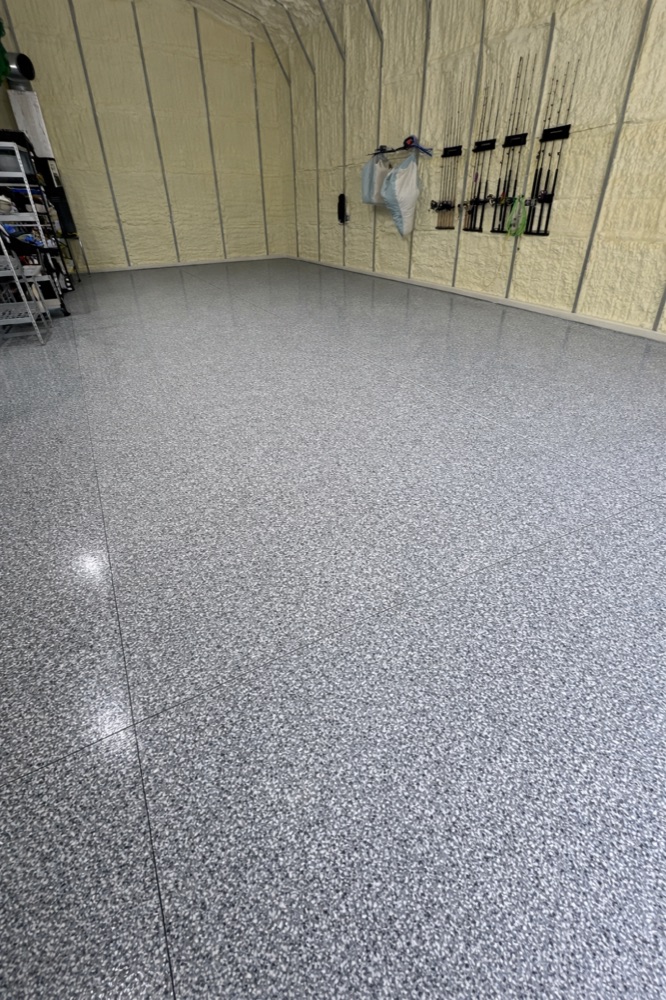
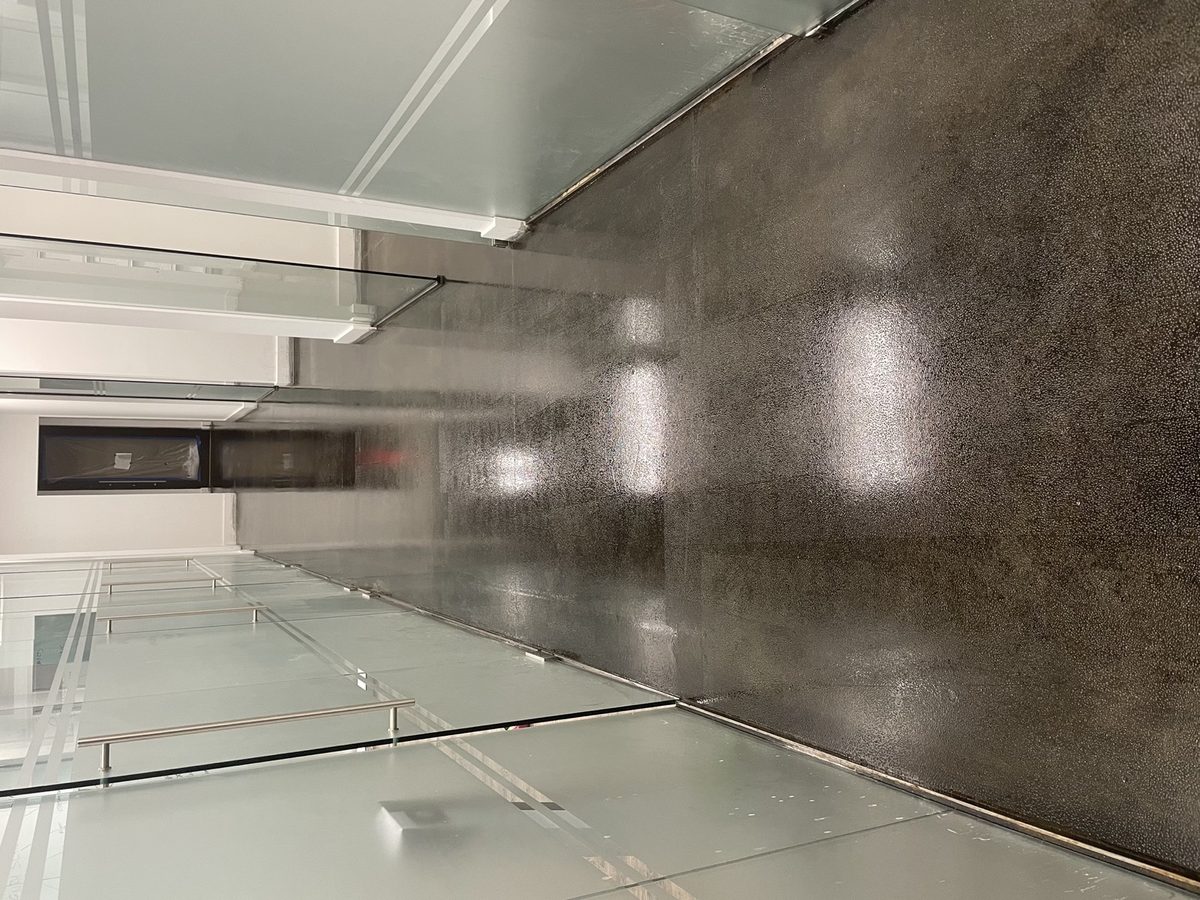
- Heavy foot traffic from customers and employees
- Forklift and pallet jack use in warehouses
- Dropped tools and equipment in industrial settings
- Rolling carts and chairs in retail and office environments
With proper installation and maintenance, commercial epoxy floors can last 10-20 years or more, far outlasting carpet, vinyl, or standard concrete.
2. Easy Maintenance & Cleaning
One of the biggest advantages of epoxy flooring for Florida businesses is how easy it is to keep clean. The seamless, non-porous surface means:
- Spills wipe up instantly without staining
- Dirt and debris sweep away easily
- No grout lines or seams to trap bacteria
- Simple mop-and-bucket cleaning is all that's needed
For restaurants, medical facilities, and retail stores where cleanliness is paramount, epoxy flooring makes maintaining a spotless appearance effortless.
3. Enhanced Safety Features
Safety is a top priority for any business, and epoxy flooring delivers with several built-in safety features:
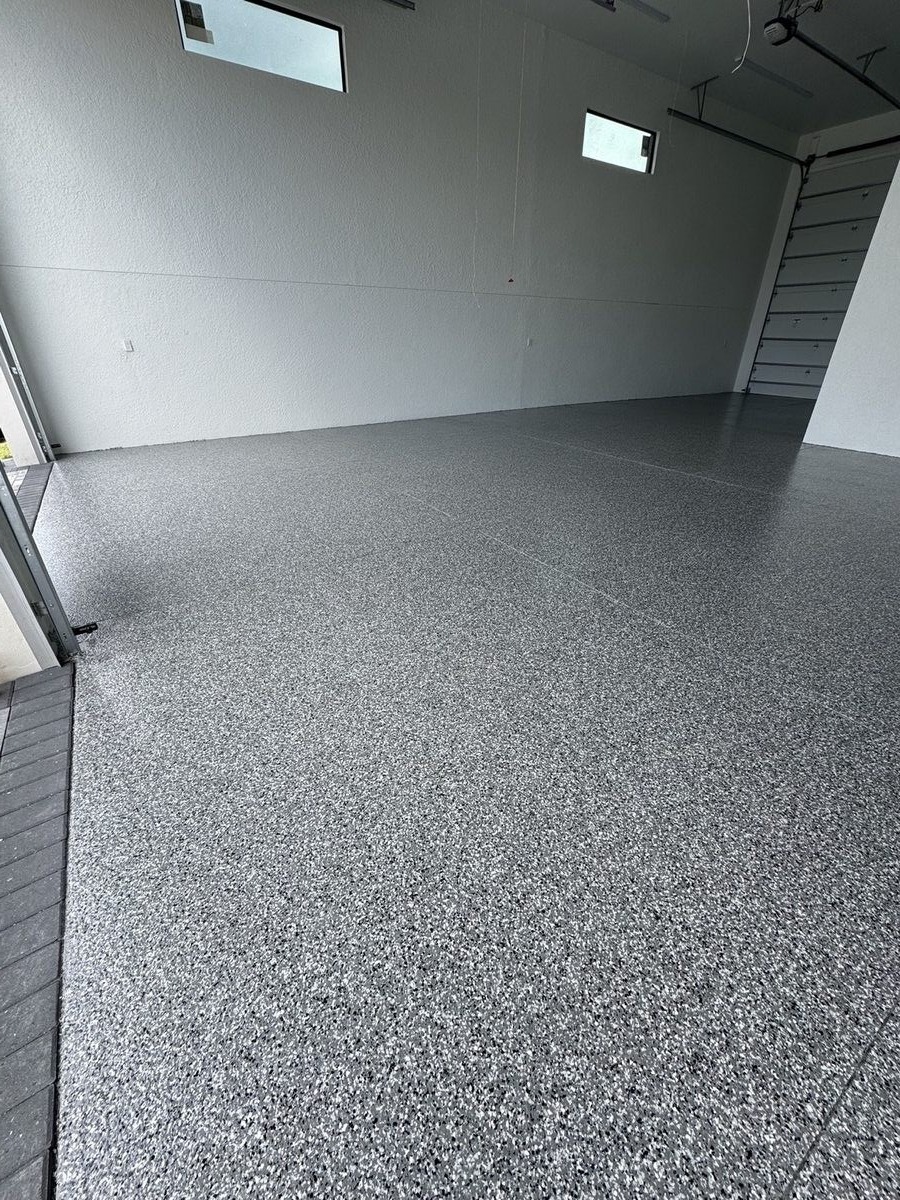
- Slip resistance: Anti-slip additives can be incorporated into the topcoat
- High visibility: Bright colors and line markings improve wayfinding
- Chemical resistance: Protects against spills in industrial environments
- Fire resistance: Epoxy doesn't support combustion
These safety features can help reduce workplace accidents and may even lower your insurance premiums.
4. Professional Appearance
First impressions matter in business, and your flooring plays a big role in how customers perceive your company. Commercial epoxy flooring offers:
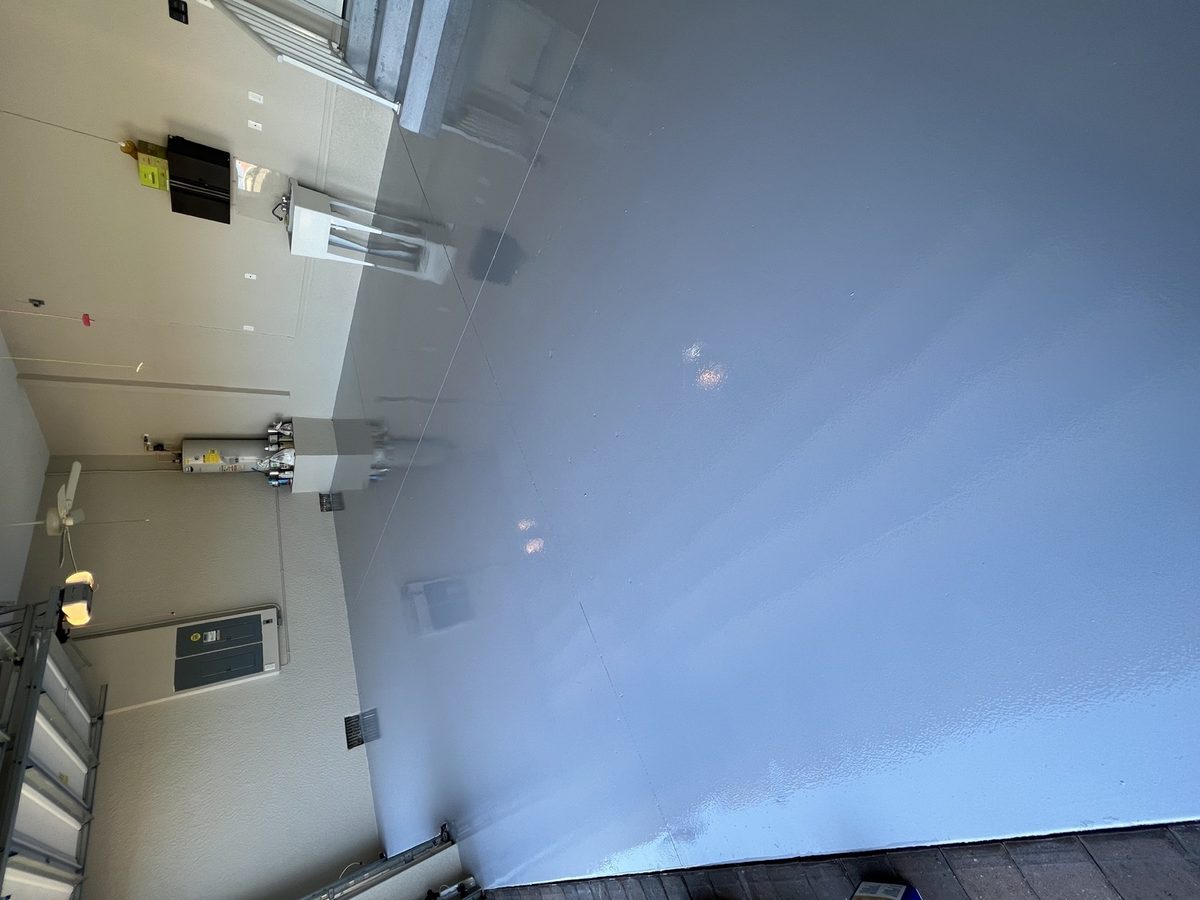
- High-gloss finishes that reflect light and brighten spaces
- Custom colors to match your brand identity
- Logo embedding and custom designs
- A clean, modern look that impresses visitors
Whether you're running a showroom, restaurant, or professional office, epoxy flooring elevates your space and reinforces your brand image.
5. Cost-Effective Long-Term Investment
While epoxy flooring has a higher upfront cost than some alternatives, it's one of the most cost-effective long-term flooring investments you can make:
- Lower maintenance costs: No need for waxing, polishing, or special cleaning products
- Reduced replacement frequency: Lasts 3-5 times longer than carpet or vinyl
- Energy savings: High-gloss finishes reflect light, reducing lighting needs
- Minimal downtime: Many installations completed in one day or over a weekend
When you calculate the total cost of ownership over 10-15 years, epoxy flooring often costs less than repeatedly replacing cheaper alternatives.
Industries That Benefit Most from Epoxy Flooring
Commercial epoxy flooring is ideal for a wide range of Florida businesses, including:
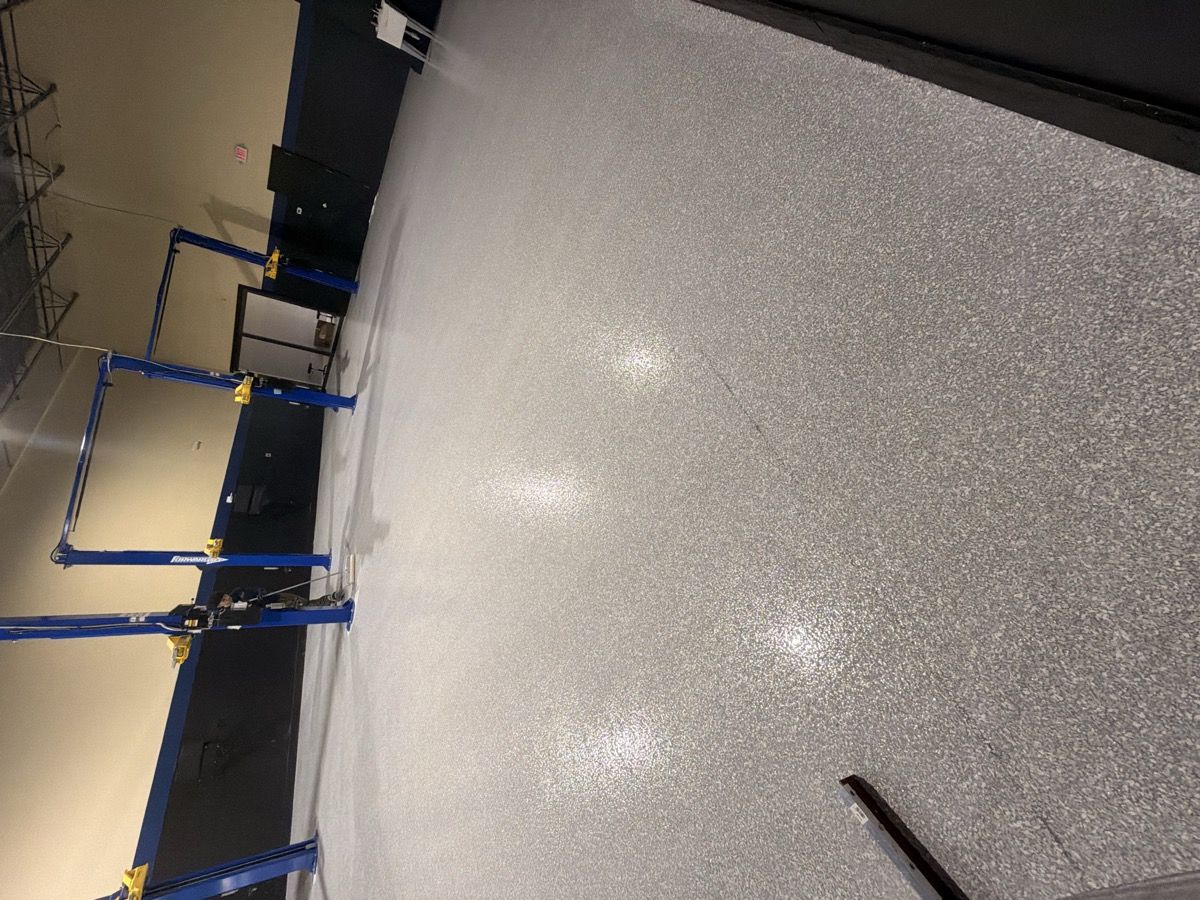
- Restaurants and food service: Easy to clean, meets health codes
- Retail stores: Professional appearance, handles heavy traffic
- Medical facilities: Seamless, sanitary surface
- Warehouses: Our warehouse flooring solutions withstand forklifts and heavy equipment
- Auto dealerships: Showroom-quality finish, oil resistant
- Manufacturing: Our industrial floor coatings are chemical resistant and easy to maintain
- Office buildings: Modern look, low maintenance
Florida-Specific Advantages
Beyond the five core benefits listed above, commercial epoxy flooring offers several advantages that are particularly relevant to businesses operating in the Sunshine State.
Humidity and Moisture Resistance
Florida's average relative humidity regularly exceeds 80%, and afternoon thunderstorms are a near-daily occurrence during the wet season. This moisture-heavy environment creates ideal conditions for mold, mildew, and bacteria growth on porous flooring surfaces. Commercial epoxy creates a completely sealed, non-porous barrier over your concrete slab, eliminating the tiny crevices where moisture can accumulate and microorganisms can thrive. For food service businesses, medical offices, and retail stores in areas like Fort Myers and Orlando, this moisture resistance translates directly into a healthier environment for employees and customers alike.
Hurricane and Storm Resilience
Florida businesses know that hurricane season is an unavoidable reality. When storms bring flooding, wind-driven rain, or debris, your flooring takes a direct hit. Epoxy-coated concrete holds up remarkably well after water intrusion. Unlike carpet that must be torn out, or VCT tile that warps and delaminates, epoxy can be cleaned, dried, and returned to service quickly after a flood event. The seamless surface also prevents standing water from seeping into seams or grout lines, reducing the risk of mold growth beneath the flooring. For businesses in flood-prone areas of Southwest Florida or along the Central Florida coast, this resilience can mean the difference between reopening in days versus weeks after a major storm.
No Mold or Mildew Growth
Mold is a constant concern for Florida building owners, and flooring is one of the most common places it takes hold. Carpet fibers, VCT adhesives, and even grout between ceramic tiles can all harbor mold spores in high-humidity environments. Epoxy's seamless, non-organic surface provides no food source for mold and no hiding places for spores. When combined with proper building ventilation and humidity control, epoxy flooring helps business owners maintain clean, safe indoor air quality year-round.
ROI and Total Cost of Ownership
Smart business owners think beyond the initial price tag and consider total cost of ownership when selecting flooring. Here is how commercial epoxy stacks up as a long-term investment.
Upfront Cost vs. Lifetime Value
A professional commercial epoxy installation typically costs between $3 and $7 per square foot, depending on the system and any decorative elements. By comparison, commercial carpet tiles run $2 to $5 per square foot installed but need replacement every 5 to 7 years. VCT (vinyl composition tile) costs $3 to $6 installed and requires ongoing waxing and stripping that adds $0.50 to $1.50 per square foot annually in maintenance costs. Over a 15-year period, a 5,000-square-foot commercial space with VCT flooring could easily spend $50,000 or more on maintenance and replacement, while the same space with a professionally installed epoxy floor might require only a single recoat at year 10 for a fraction of that cost.
Payback Period Examples
Consider a 3,000-square-foot retail store currently spending $1,800 per year on VCT stripping, waxing, and patching. An epoxy floor installed at $5 per square foot costs $15,000 upfront. With annual maintenance dropping to under $200 for basic cleaning supplies, the store saves roughly $1,600 per year in maintenance alone. That puts the payback period at under 10 years, without accounting for the improved customer experience, reduced slip-and-fall liability, and zero replacement costs during that period. For high-traffic restaurants or industrial facilities where floor abuse is even greater, the payback period can be significantly shorter.
Energy Cost Savings
The reflective surface of a high-gloss epoxy floor can meaningfully reduce lighting costs. Business owners frequently report being able to reduce the number of light fixtures or switch to lower-wattage bulbs after epoxy installation because the floor bounces light back into the space rather than absorbing it. In a warehouse or large retail environment where lighting is a significant operating expense, this benefit adds up over time.
How Commercial Epoxy Compares to Alternatives
To put epoxy's advantages in context, here is a brief comparison with the most common commercial flooring alternatives Florida businesses consider.
Epoxy vs. VCT (Vinyl Composition Tile)
VCT has been a staple in commercial spaces for decades, but it comes with significant ongoing maintenance demands. VCT requires regular stripping, waxing, and buffing to maintain its appearance, and the seams between tiles are vulnerable to moisture penetration, making it a poor choice for Florida's humidity. Epoxy eliminates seams entirely and requires no waxing or buffing. Over a 15-year span, epoxy costs substantially less to maintain while delivering a more professional appearance.
Epoxy vs. Carpet Tiles
Commercial carpet tiles are affordable upfront but struggle in Florida's climate. They absorb moisture from humidity, trap allergens, and stain easily in food service environments. In a high-humidity environment, carpet tiles can develop musty odors and mold growth underneath, creating health concerns and an unpleasant experience for customers. Epoxy flooring avoids every one of these issues while lasting three to four times longer.
Epoxy vs. Polished Concrete
Polished concrete is an excellent flooring option, and we offer polished concrete services as well. However, polished concrete does not provide the same chemical resistance as epoxy, making it less suitable for restaurants, auto shops, and industrial settings where spills are common. Epoxy also offers far more decorative options, including custom colors, logos, and metallic finishes. For businesses that need both aesthetics and heavy-duty protection, epoxy is typically the stronger choice.
Installation Timeline and Business Disruption
One of the most common concerns business owners raise is how long the installation will take and how much it will disrupt their operations. Here is what you can realistically expect.
Typical Project Timeline
Most commercial epoxy installations follow a predictable timeline:
- Day 1: Surface preparation, including diamond grinding, crack repair, and cleaning. This is the noisiest phase and typically takes a full day for spaces under 5,000 square feet.
- Day 2: Primer and base coat application. The space must be clear of foot traffic during this phase.
- Day 3: Topcoat application and any decorative elements such as safety line striping or logo work.
- Day 4-5: Cure time. Light foot traffic is usually possible within 24 hours of the topcoat, but heavy equipment and normal operations should wait 48 to 72 hours.
Minimizing Business Disruption
We understand that downtime costs money. That is why we work with Florida business owners to schedule installations during off-hours, weekends, or slower business periods. For larger spaces, we can phase the installation, coating one section at a time so that the rest of the facility remains operational. Many of our commercial epoxy projects in the Fort Myers and Orlando areas are completed over a single weekend, allowing the business to reopen on Monday morning with brand-new floors and zero lost revenue during regular operating hours.
Planning Around Florida's Weather
Temperature and humidity affect epoxy cure times, so our team monitors weather conditions closely when scheduling installations. During Florida's rainy season from June through September, we take extra precautions to control humidity inside the workspace, including using dehumidifiers and ensuring proper ventilation. This attention to environmental conditions ensures a flawless cure regardless of what the weather is doing outside.
Making the Right Choice for Your Business
If you're considering new flooring for your Florida business, commercial epoxy deserves serious consideration. The combination of durability, easy maintenance, safety, appearance, and long-term value makes it one of the smartest flooring investments you can make.
Ready to Upgrade Your Business Flooring?
Contact Epoxy Creations LLC for a free consultation and estimate. We'll assess your space, discuss your needs, and recommend the best epoxy system for your business.
Get Free Estimate Call (239) 888-9900